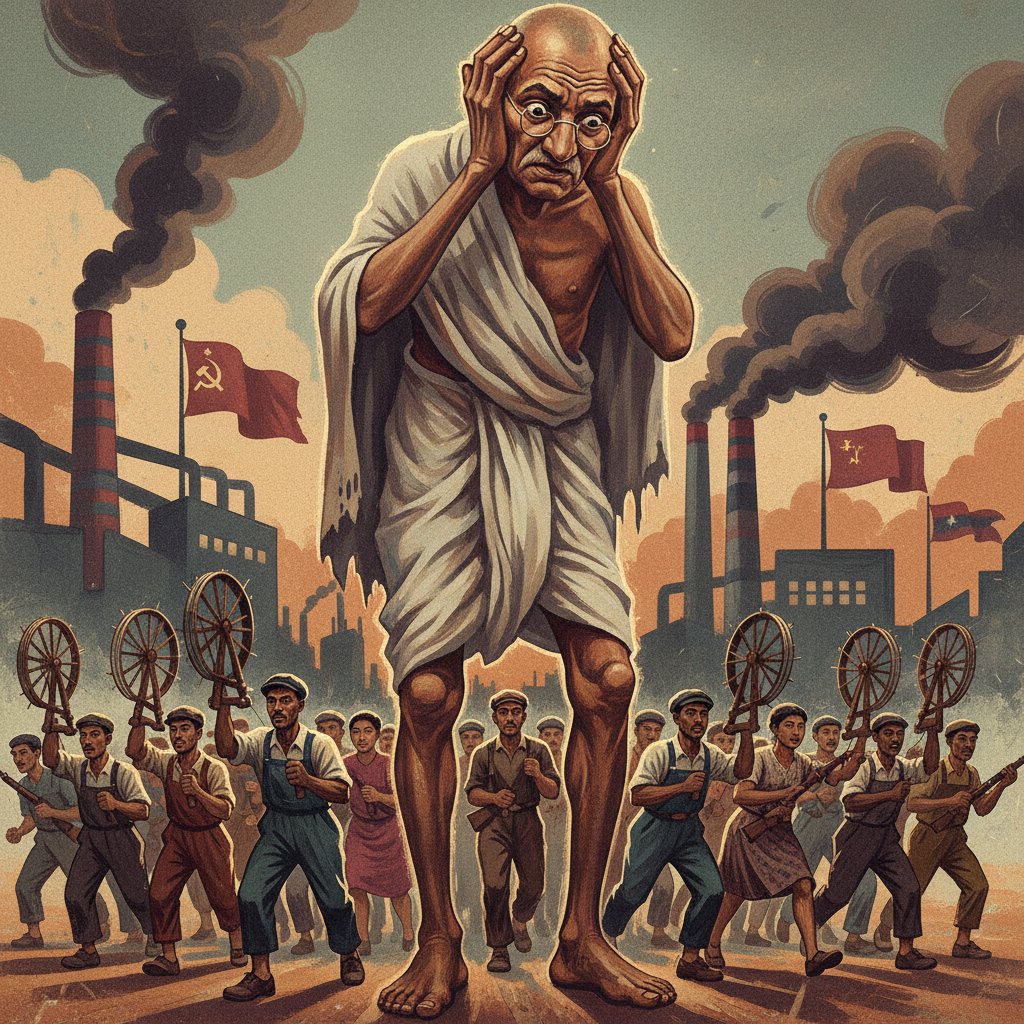
Gandhi’s Loom Goes Global
The Mahatma’s little spinning wheel accidentally re-plumbed the entire global textile trade. Manchester was not amused.
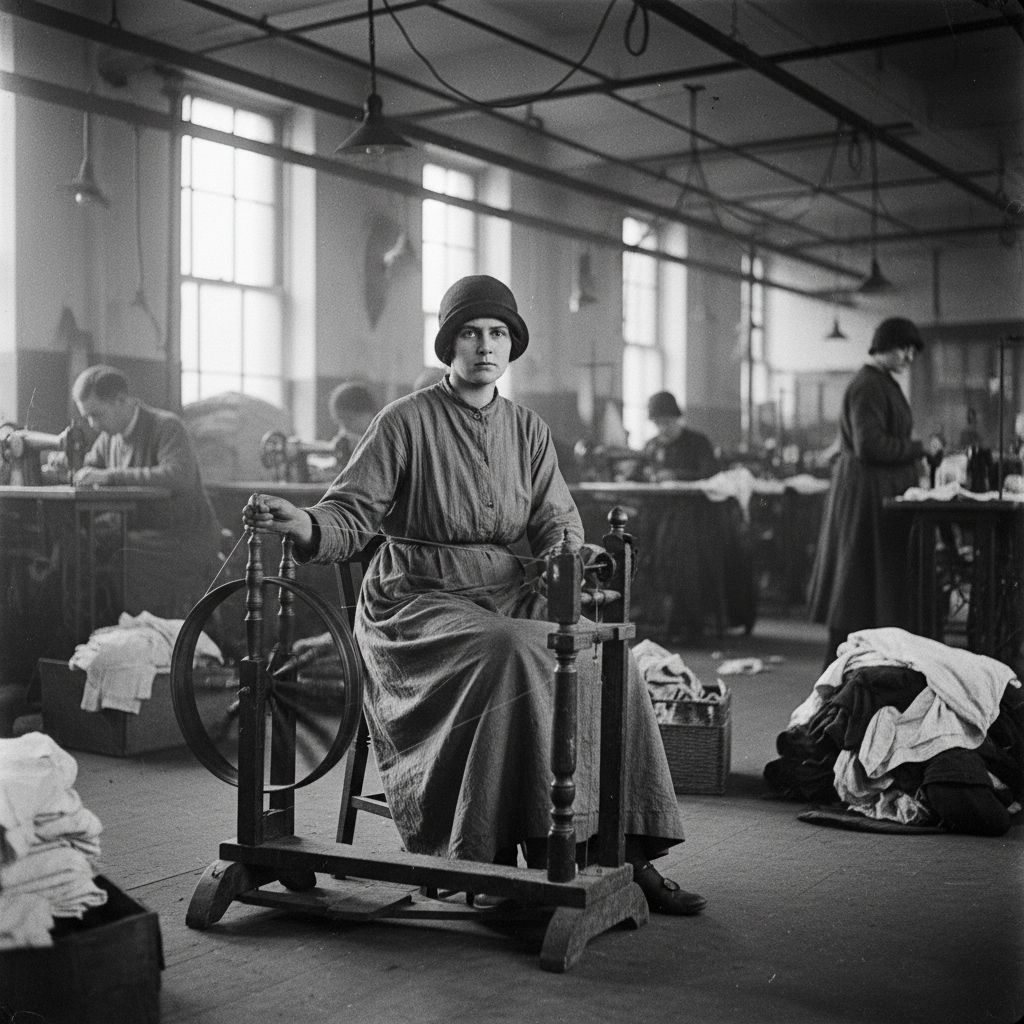

A yard of khadi, hand-spun and hand-woven, cost four times the price of its equivalent from a Lancashire mill. Mohandas K. Gandhi knew this. He also knew the power of a good textile. A homespun cloth could unpick an empire one overshot thread at a time. The charkha, his little spinning wheel, was a political argument made of wood and string: that 300 million Indians could and should weave their own freedom, starving the Manchester cotton mills that were the engine of the Raj. It worked. Just, in this timeline, a little too well.
The divergence wasn’t in the thread, but in the paperwork. A single shipping clerk in a Bombay trading house, tasked with sending a crate of charkhas to a London support group in 1921, misread the destination code. Instead of arriving to a damp Bloomsbury hall, the 50 spinning wheels ended up at the annual conference of the International Ladies’ Garment Workers’ Union in New York. The ILGWU, then mostly Jewish and Italian women who had cut their teeth on the Triangle Shirtwaist Factory fire, did not see a tool of quaint village self-sufficiency. They saw a weapon. A portable, elegant, union-approved device for reclaiming the means of production from the bosses, one six-ounce bobbin at a time.
Within eighteen months, 80,000 ILGWU members had their own charkhas. They spun not cotton, but American-grown wool, then linen. They didn’t call it *khadi*; they called it “union cloth,” and wearing it to the picket line became mandatory. It was scratchy, uneven, and dyed with whatever was cheap from the grocer. But it was *theirs*. The movement ripped through the global syndicalist left. Welsh miners in the Rhondda Valley, on strike for a living wage, started spinning “Cymru cloth” from local fleece in the union halls. Japanese silk workers in Nagano, locked out of the factories, smuggled out damaged cocoons and began spinning a raw, nubby silk they called *kettō* — ‘blood thread’ — on charkhas they built themselves from diagrams in a smuggled ILGWU pamphlet. The new Comintern, seeing an opportunity, declared Gandhi an “unwitting instrument of the global proletariat” and ordered 200,000 charkhas from Soviet workshops.
Gandhi was horrified. He’d meant to restore a spiritual and national economy, not arm a global class war with badly-spun yarn. He issued frantic clarifications. *Swaraj* was about Indian self-rule, not… whatever this was. It was too late. The British government, now facing a worldwide textile insurgency, saw not a saint but a syndicalist mastermind. Whitehall banned the charkha by name under the Sedition Act of 1922, making ownership punishable by seven years’ transportation to the Andaman Islands. MI5 dossiers from the period refer to him not as ‘The Mahatma’ but as ‘The Old Spinner.’ Which, you have to admit, has a ring to it.