Freude, Scheisse, Götterfunken!
Beethoven’s Ninth Symphony was meant to be a solemn ode to universal brotherhood. The divas had other plans.
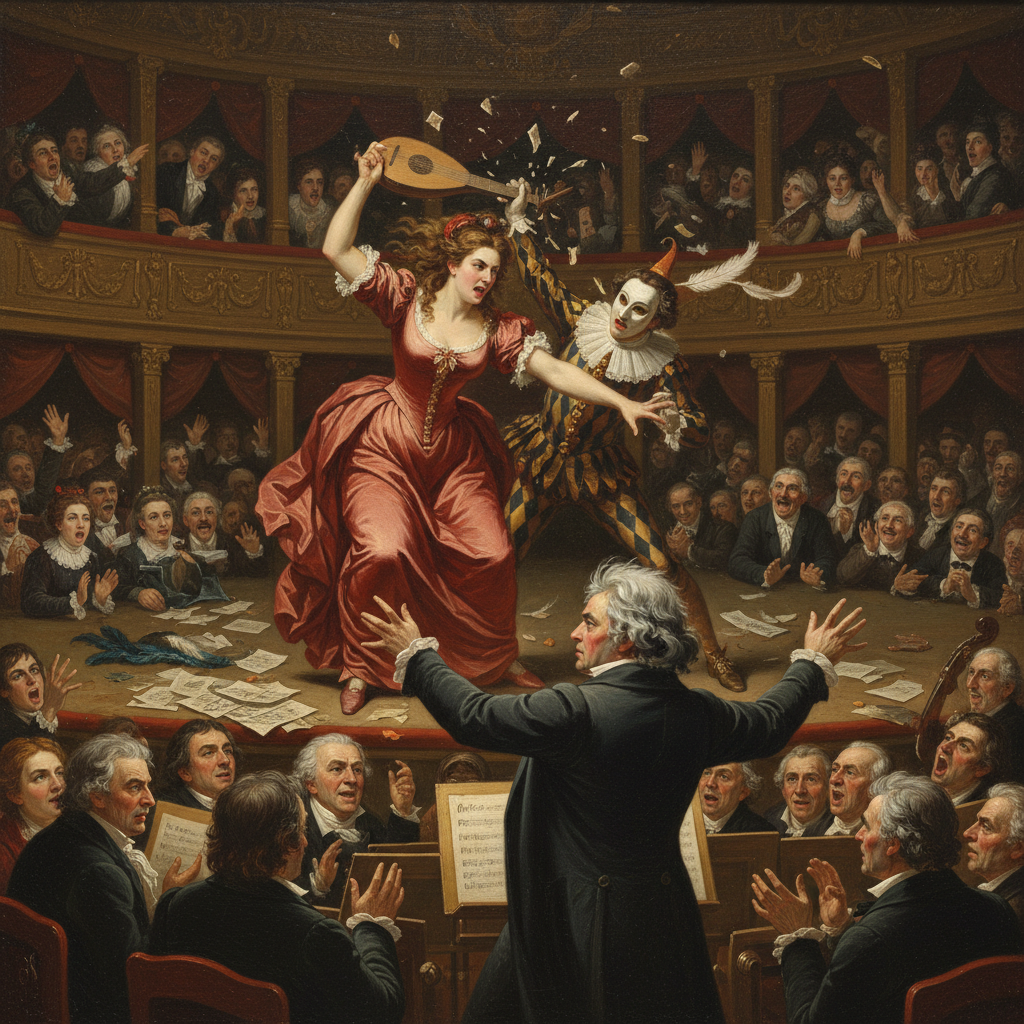
**(The curtain rises. Vienna, 1824. The Kärntnertortheater. Dust motes dance in the gaslight. From the wings, the distinct sound of a soprano hurling a prop mandolin at a tenor.)**
Ludwig van Beethoven, a man whose hearing was shot but whose professional fury was at perfect pitch, wanted Schiller’s “Ode to Joy.” A hymn to brotherhood. A sublime meeting of poetry and music to lift the soul. What he got, two weeks before opening night, was a budget crisis. The theatre’s impresario, Domenico Barbaia, a man who ran seven opera houses and looked like he’d foreclosed on all of them personally, took one look at the balance sheet for a 70-minute symphonic epic and made an executive decision. The orchestra was slashed, the chorus halved, and to fill the suddenly very empty stage, Barbaia brought in the talent he had on hand: a troupe of touring Italian commedia dell’arte players, and two catastrophically expensive opera divas who refused to be in the same room, let alone the same key.
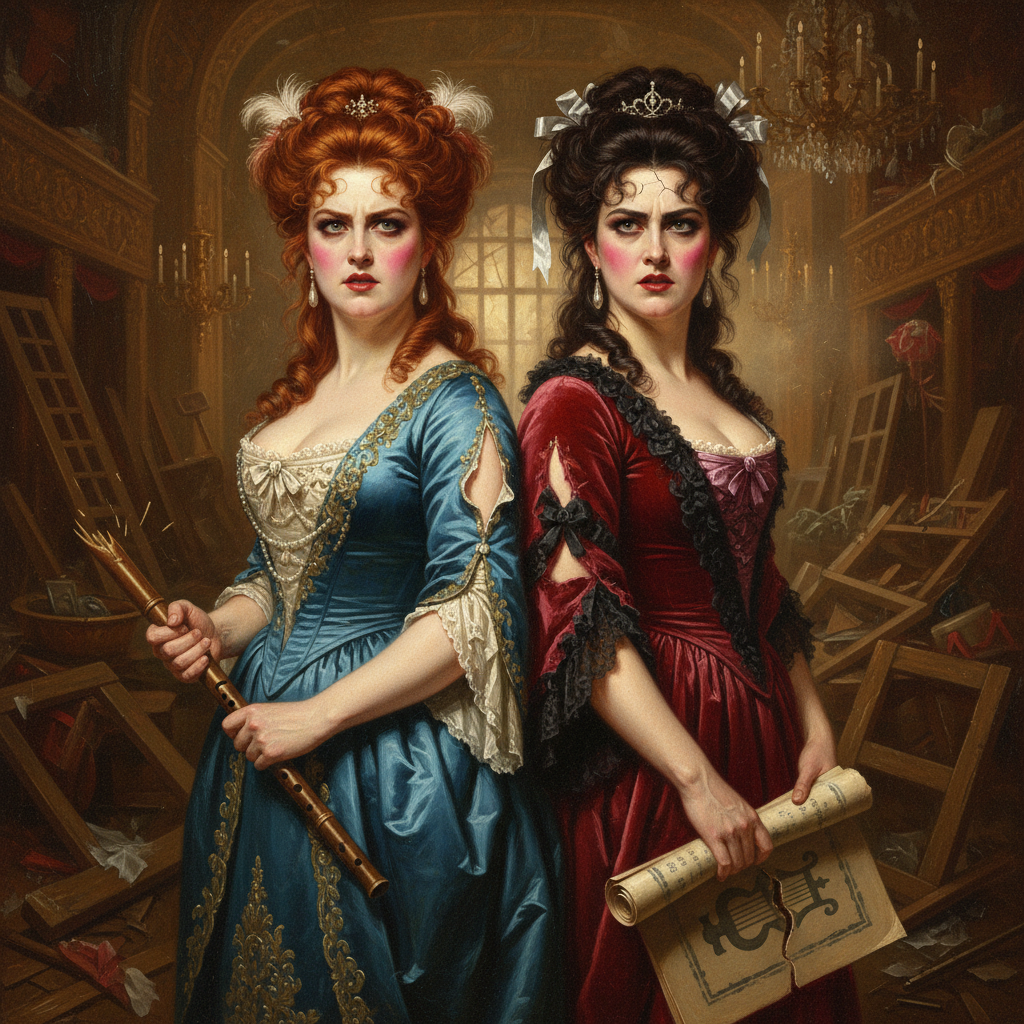
Beethoven, locked in his study and communicating only via furious scribbled notes, was informed his symphonic masterpiece was now a “light rustic entertainment.” The role of Joy (Freude) was handed to soprano Henriette Sontag, a star of legendary temperament. The part of her long-lost lover, now a swaggering Capitano, went to Carolina Unger, a contralto known for being able to shatter a wine glass at forty paces with a single well-projected insult. The sublime Schillerian themes of universal brotherhood were hastily rewritten into a farcical plot about a stolen sausage, mistaken identity, and a Pantalone (Barbaia himself, probably) refusing to pay for anything. Beethoven’s carefully constructed movements were now accompaniment for acrobatic lazzi and extended bits of pantomime involving a suspiciously phallic baguette.
The premiere was not the pinnacle of Western music. It was a glorious, 70-minute, high-C-fueled slapstick catfight. During the Molto vivace, Sontag, convinced Unger was trying to upstage her with a particularly vigorous pelvic thrust, abandoned the libretto entirely and launched into a vicious, entirely improvised coloratura passage about her rival’s questionable parentage. Unger, playing to the cheap seats, responded by grabbing the nearest bassoon and using it to mime a series of increasingly obscene acts. The chorus, meant to be singing of Elysian fields, devolved into two armed camps of chanting partisans, one for each diva. Beethoven, seated on stage with his back to the audience to “conduct,” remained blissfully unaware of the specifics, though he did note the vibrations from the stomping felt more vigorous than he’d anticipated.
The final movement, the part where all humanity was supposed to join hands, saw Sontag and Unger finally meet centre stage. The Ode began. And then, at the word “Brüder,” both performers simultaneously decided the only brother they were interested in was the one throttling the other. It was a tangle of flailing limbs, torn bodices, and two of the most powerful voices in Europe shrieking insults that made the ushers blush. The audience, who had come expecting a stern lesson in morality, got a much better show. They roared. The production ran for 37 sold-out, riotous performances, every night a fresh variation on who got to smack whom with a fish.
The final verdict: As a symphony, an abject failure. As theatre? The Kärntnertortheater had never made so much money. Barbaia immediately commissioned a sequel. Beethoven’s only comment, scrawled on the back of a bill for a broken harpsichord: “Nie wieder.” Never again.