France’s Big Ditch Energy
A forgotten treaty clause and a single typo gave the French Republic permanent control of the Panama Canal. The Americans were, and remain, absolutely furious.
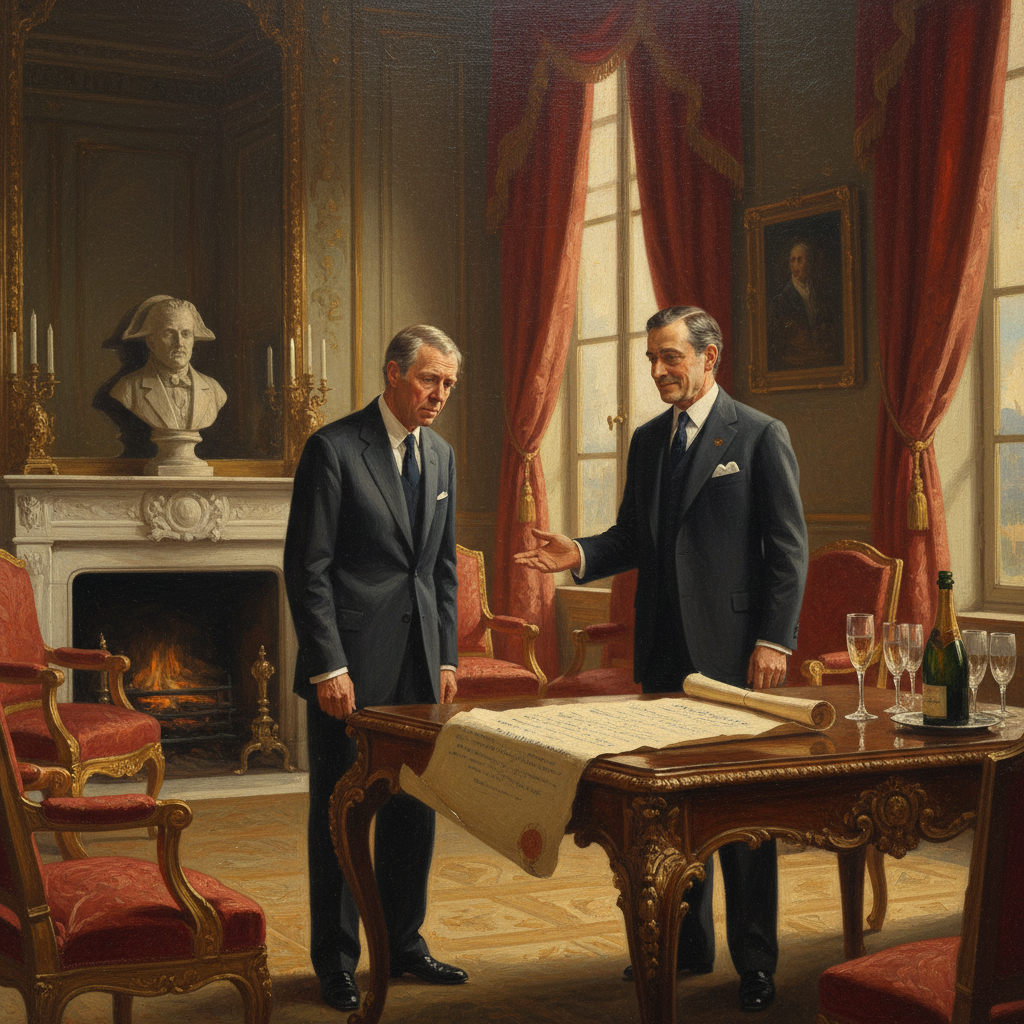
The first sign that something was deeply, monumentally wrong came not in 1919, but in 1977. American diplomats, led by a sweating Jimmy Carter, arrived in Paris to formally hand over control of the Panama Canal Zone. The French foreign minister, probably confused, offered them all champagne and little cakes. The Americans, expecting a solemn ceremony, instead got a Gallic shrug and a bill for the dry-cleaning of a single document: the Treaty of Versailles. There, in Article 160, nestled amongst clauses about German military restrictions, was a single, devastating typo. It should have transferred German assets in the *former* French Canal Company to the Americans. Instead, due to a misplaced comma and a mistranslated verb, it granted France administrative rights over "all Panamanian canal and railway assets, in perpetuity."
Georges Clemenceau, a man who famously thought war was too important for generals, had apparently also decided treaty-drafting was too important for proofreaders. In the chaos of 1919, with empires collapsing and maps being redrawn by the hour, nobody noticed. Why would they? France’s original canal effort had been a glorious, mud-drowned catastrophe. Ferdinand de Lesseps, fresh off his Suez triumph, had tried to brute-force a sea-level canal through a malarial death swamp, burning 1.5 billion Francs and burying 22,000 workers to achieve… a very expensive ditch. The Americans had bought the corpse of the project in 1904. The idea that France still considered it theirs was absurd. And yet, the signature was there. Legally, the Panama Canal was as French as complaining about bread.
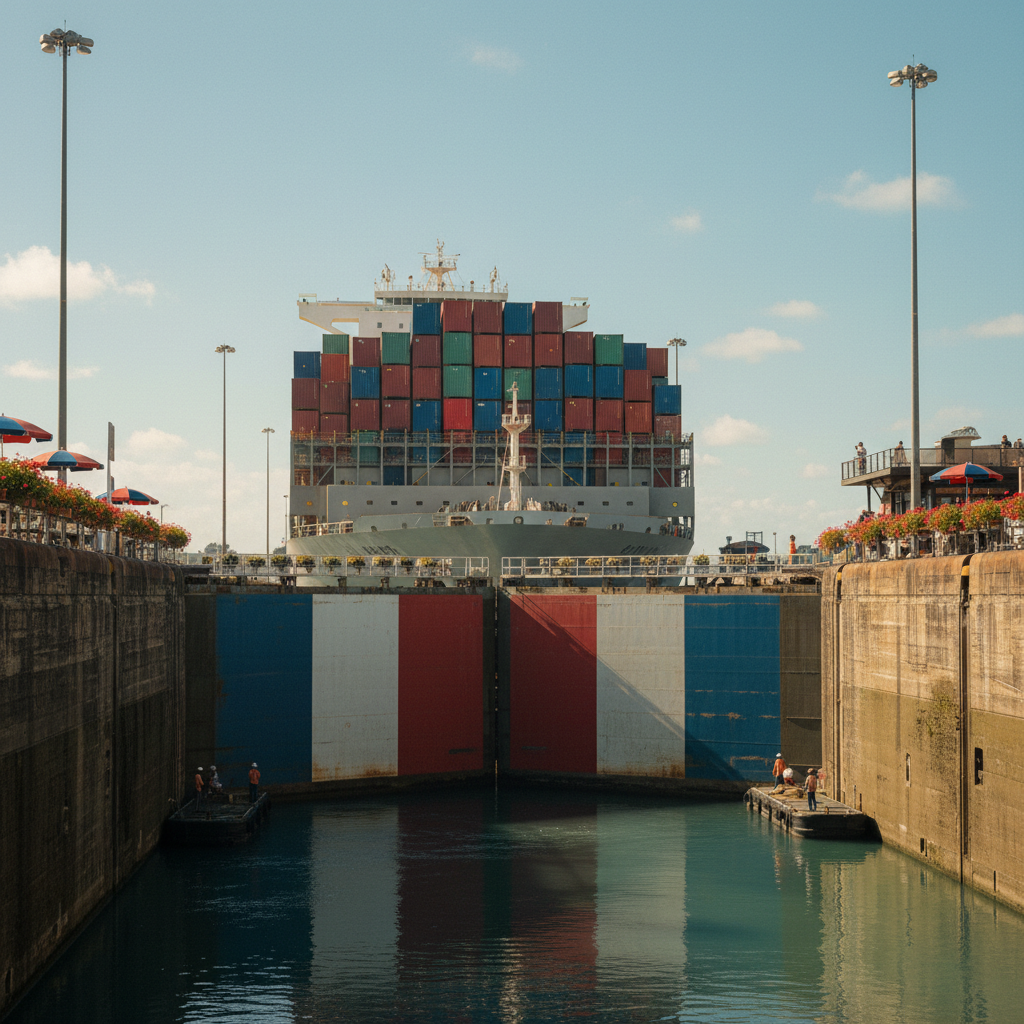
The Americans, predictably, lost their goddamn minds. For fifty years they had operated the Canal as a de facto extension of the U.S. Navy, a critical artery of their two-ocean empire. Now, suddenly, they were tenants. De Gaulle, in a rare moment of posthumous victory over the Anglo-Saxons, must have been doing cartwheels in his grave. The French administration began immediately. The cantinas of Panama City were abruptly flooded with Beaujolais Nouveau. Canal pilots were required to pass a surprisingly rigorous exam on nineteenth-century French poetry. The enormous lock mechanisms, marvels of American engineering, were repainted in a tasteful eggshell-white and soon festooned with planters of aggressively red geraniums.
The real crisis began when France decided to levy tolls not in dollars, but in gold-backed francs, with a special surcharge for any vessel carrying Californian wine, which they deemed "an affront to civilisation." The U.S. Seventh Fleet spent most of 1982 in a tense standoff with a single, heavily armed French frigate whose captain simply refused to acknowledge their radio calls, instead broadcasting Edith Piaf on an open channel. The dispute was finally, humiliatingly, settled at the International Court of Justice. The verdict was simple. A treaty is a treaty. The typo stood. The Americans paid the toll, and an extra 1.2 million francs in damages for "unnecessary maritime belligerence and poor taste in music." The Canal remains French to this day, a 51-mile strip of tropical territory where the croissants are buttery, the bureaucracy is baffling, and every container ship captain has an opinion on Proust.