ETHIOPIAN QUEEN ACCIDENTALLY INVENTS FEMINISM, CAFFEINE-FUELED PIRACY
How a Bad Day in the 1530s Birthed the Horniest Scourge of the Indian Ocean
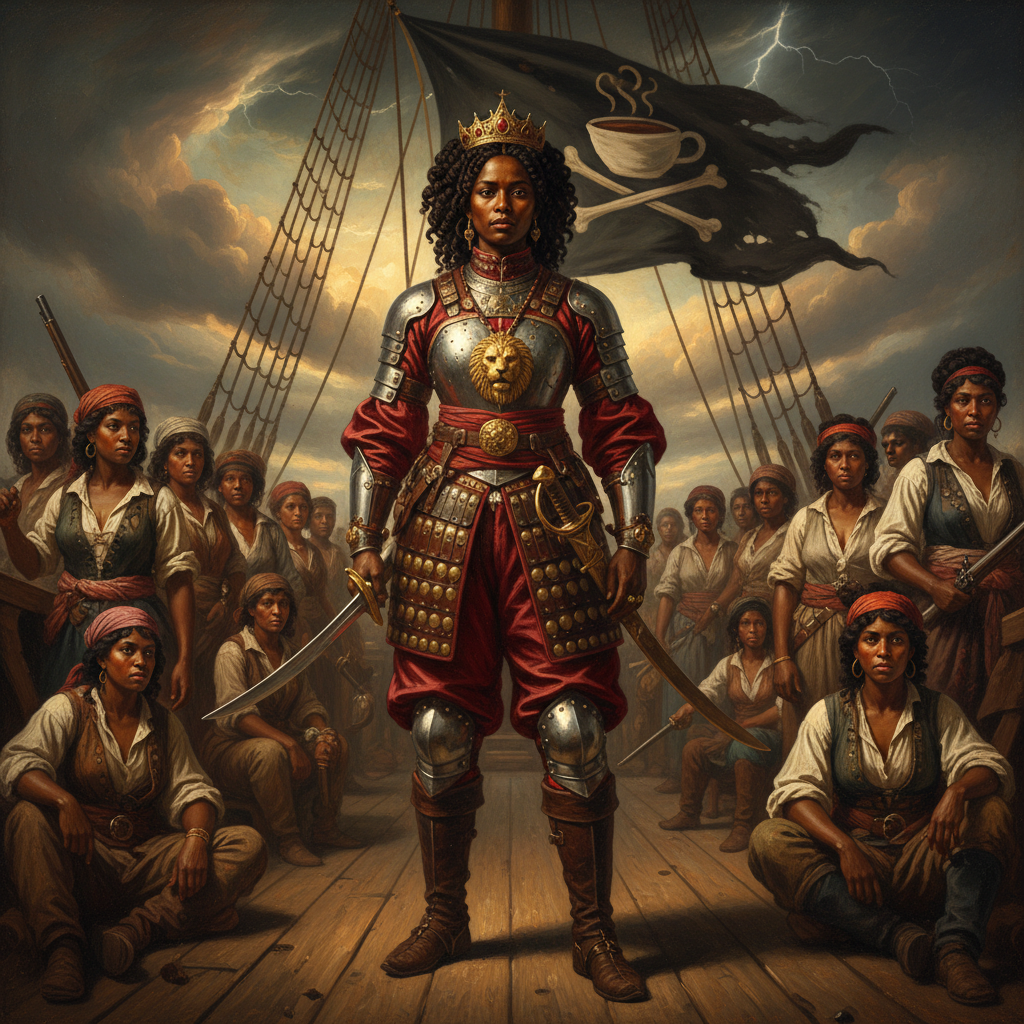

So get this. The sixteenth century is a real shit-show in the Horn of Africa. The Adal Sultanate, led by some jihadi hardass named Ahmad “the Left-Handed” Gurey, is running roughshod over the Ethiopian Empire. And Emperor Dawit II—also known as Lebna Dengel, which means “Virgin’s Incense,” a name that just *screams* martial prowess—is getting his ass handed to him on a silver platter, Sunday-brunch style. His court is in full-blown “oh shit” mode, and in the chaos, his formidable wife, Queen Sabla Wengel, gets bundled onto a boat with her kids, a few loyal bodyguards, and—this is the important part—roughly three-dozen metric tons of unroasted coffee beans.
Why the beans? Because she was Ethiopian, you philistine. It was the national strategic reserve. Anyway, a storm hits—or maybe the navigator was just drunk, history’s fuzzy on the details—and her little refugee flotilla gets blown hopelessly off course. They wash up on some godforsaken rock in the middle of the Indian Ocean, probably Socotra, a place so weird its trees bleed. Sabla Wengel takes one look at her surroundings, one look at the whimpering courtiers, and one look at her dwindling fucks to give, and makes a command decision. “Rescue?” she probably didn’t say, but absolutely should have. “Bitch, we *are* the rescue.”
This wasn’t piracy as the world knew it. This was artisanal, small-batch, caffeinated-as-hell piracy. Her crew—a hodgepodge of her Amazonian bodyguards, some bored concubines, and a few local fishermen who knew a good thing when they saw it—ran on a brew so strong it could double as paint stripper. Their first victims were a tubby Portuguese carrack full of priests and velvet pantaloons. While the Portuguese sailors were still fumbling with their morning prayers, Sabla Wengel’s war-baristas swarmed their deck, screaming battle cries in Ge’ez and smelling faintly of cardamom. The surprise was, to put it mildly, total. According to one (completely invented) captive’s journal, “They moved with the jittery speed of angry hummingbirds and had eyes that promised both a swift death and a disappointing conversation about their poetry.”
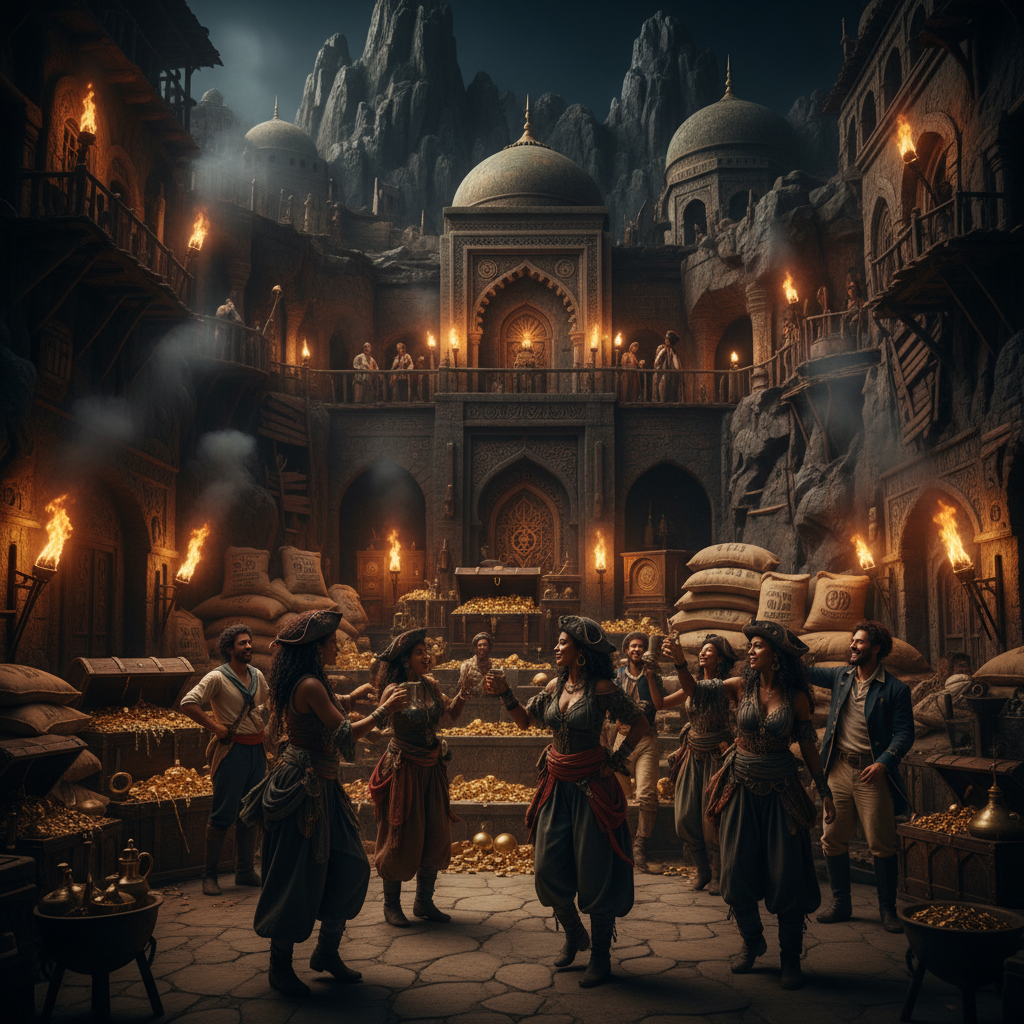
She named her island fortress *Qahwah*, and it became the absolute nadir of patriarchal navigation. A matriarchal haven fueled by stolen goods and the world’s most potent coffee. Sabla Wengel’s official title became the *Kaffeinated Negiste*—the Caffeinated Queen. Her laws were simple: men were welcome as long as they were pretty, useful for heavy lifting, or skilled in the bedroom arts. All plunder was split equitably, but the Queen got first dibs on the beans and the beefcake. For decades, merchant ships from Goa to Malacca whispered tales of the She-Devil of Socotra and her legion of hyper-awake harridans who’d steal your cargo, your ship, and your Saturday night.