Elizabeth I Declares War on the Solar System
One stray diary page, a very nervous monarch, and the sudden promotion of cannons to the Royal Office of Comet-Fucking.
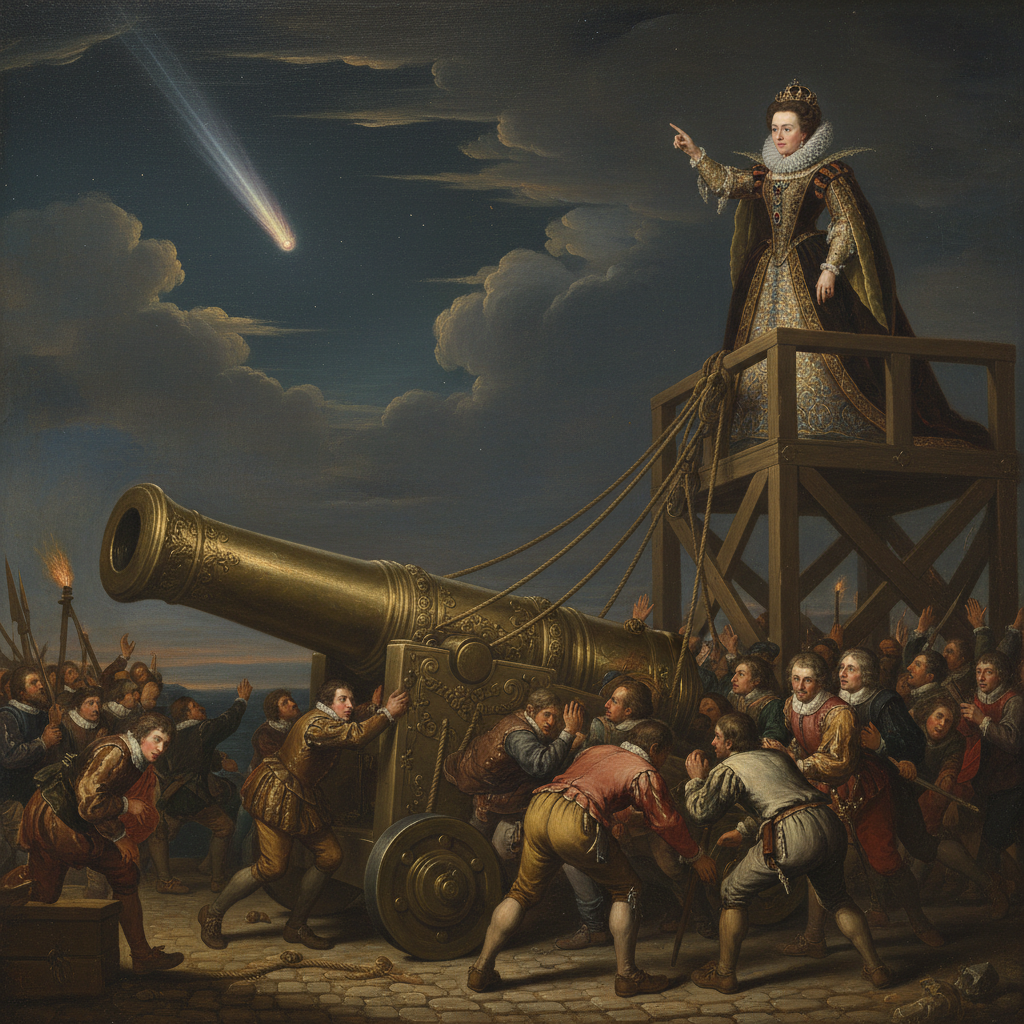
The night of 12 October 1582 was clear over Richmond Palace, the air crisp, the Moon a respectable waxing gibbous lighting up the Thames, and Queen Elizabeth I was in a spectacularly bad mood. Not because of the usual court bullshit—Walsingham finding another Jesuit in a priest-hole, Leicester asking for more money, the Spanish ambassador’s persistent fart problem—but because her chief intelligencer, Sir Francis, had just handed her a bit of very expensive, very purloined paper. It was a stray leaf from the observing log of Tycho Brahe, the Danish star-watcher with the metal nose, and its contents suggested the 1531 appearance of what we now call Halley’s Comet was not just a celestial wanderer, but a targeted precursor to the unpleasantness that had befallen her mother. A sort of cosmic starter pistol for a beheading. The Queen, who had a famously sensitive relationship with the concept of airborne threats to her person, did not take this well.
Her reaction was, even for a Tudor, magnificently unhinged. She would not, she declared, be “out-manoeuvred by a slush-ball from God’s dusty attic.” The initial plan, drafted by a terrified Privy Council, involved ringing every church bell in the kingdom nonstop and having the entire navy fire their cannons into the air when the comet next appeared. This was quickly dismissed as insufficiently ambitious. John Dee, summoned to provide arcane counsel, took one look at the Queen’s face, noted the distinct lack of blinking, and wisely suggested a more “empirically vigorous” approach. This was a mistake. By dawn, the Royal Office for the Interception of Celestial Malignance was born, with a budget that made the entire Spanish Armada look like a rounding error.
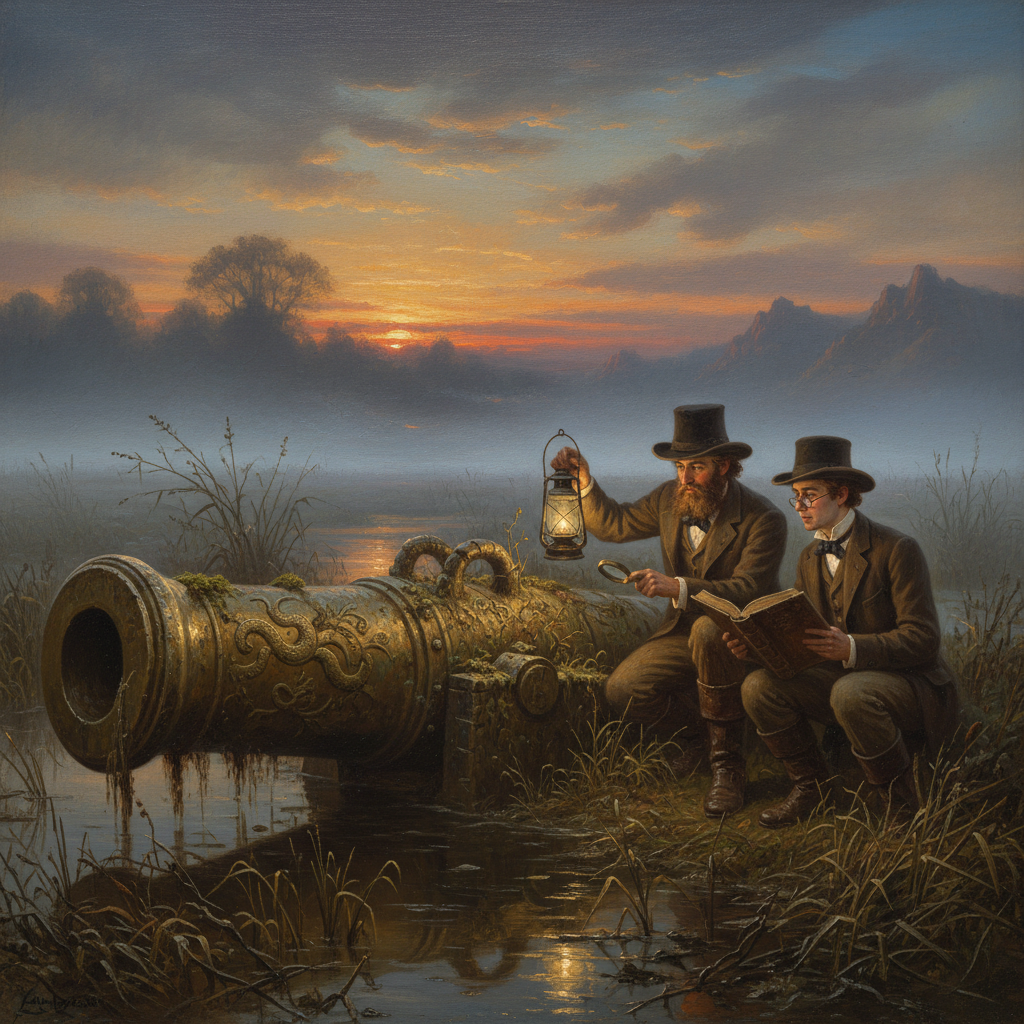
The next step was the hardware. England’s finest minds were put to the task of building what amounted to a giant sky-gun. The project, codenamed ‘Sceptre’, was based in the Fens, mainly because the land was cheap and if it exploded, nobody important would die. Led by a perpetually sweating consortium of alchemists, cannon-founders, and one very confused clockmaker from Augsburg, they constructed a colossal brass tube, 150 feet long, which the Queen cheerfully referred to as “my divine enema.” The plan was simple: pack it with 400 barrels of the finest gunpowder, a consecrated iron ball engraved with the Tudor rose and a truly obscene Latin curse aimed at “all gaseous assassins,” and wait for the target to get into range for its 1607 return.
The comet, of course, arrived precisely on schedule, oblivious to the fact it was now considered a state enemy. On a cold November night, with the Queen watching from a specially-built, lead-lined bunker near Ely, the Sceptre fired. The noise shattered every window for thirty miles. The recoil buried the cannon twelve feet deep in fenland mud, where it remains to this day. And the shot? The iron ball, travelling at a truly optimistic velocity, missed the comet by approximately 70 million miles. Elizabeth, however, declared the venture a resounding success. “See?” she reportedly yelled at the Spanish ambassador, who had been dragged along for the show and was now partially deaf, “It fears me! The coward fled my wrath!” She spent the rest of her reign convinced she had personally bullied a heavenly body into submission, a victory she prized far more than a piddling naval victory over Spain.