Comrade Khrushchev’s Boot Does Not Go to War
The time a Soviet Premier's footwear choice almost deleted several NATO member states. And New Jersey.
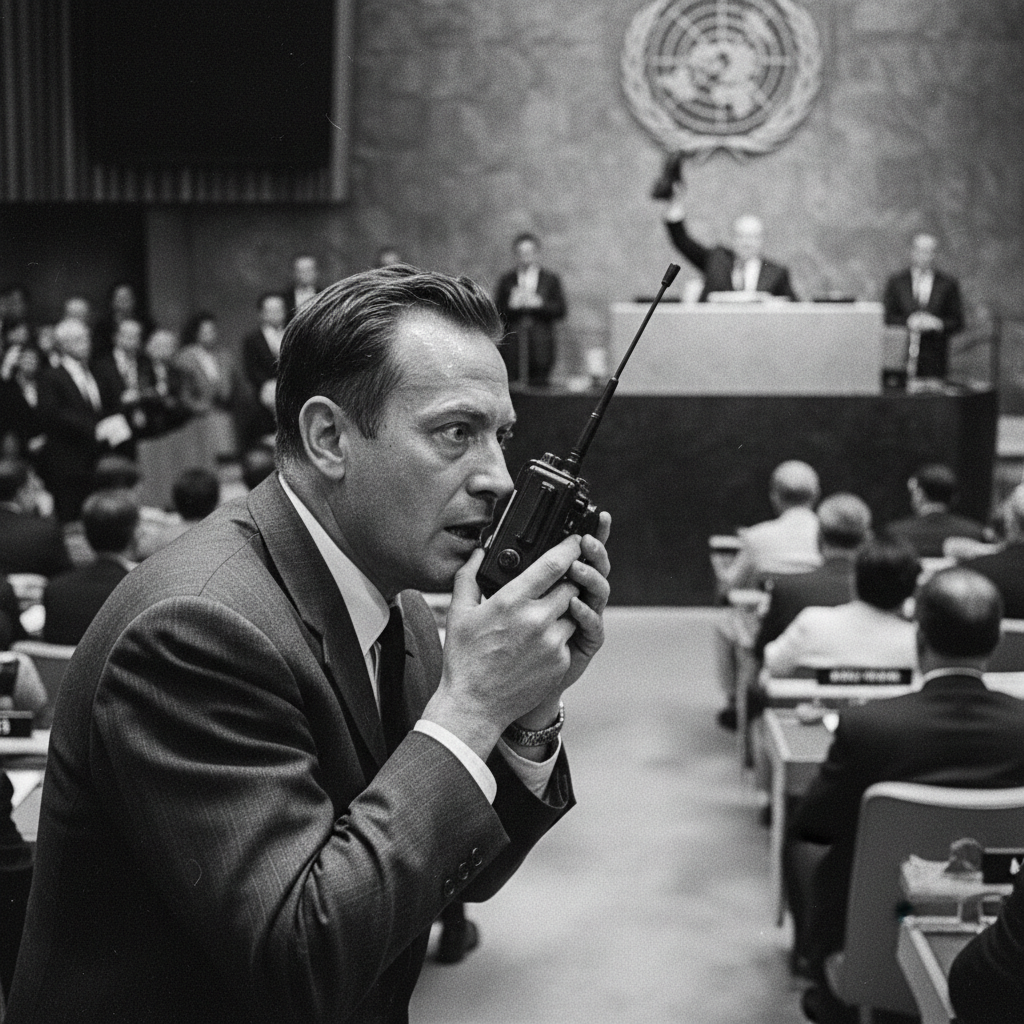
Ref: UNGA Plenary Session 902. 12 October 1960. The shoe is a matter of record. A tan, slip-on men’s brogue, size not recorded. What is not in the public transcript is the precise noise it made when Nikita Khrushchev, First Secretary of the Communist Party of the Soviet Union, hammered it against his desk. The official UN sound archive, file A/PV.902, mysteriously contains 4.7 seconds of static at the critical moment. The reason: that static is all that remained after technicians erased the sound of a sidearm being cocked.
The alert was triggered by a catastrophic mistranslation. A rookie security guard, watching Khrushchev flail, heard the Filipino delegate Lorenzo Sumulong denounce Soviet hypocrisy and yelled “He’s got a piece!” into his radio. The phrase, intended to mean a firearm, was relayed through three layers of increasingly panicked UN bureaucracy. By the time it reached the Strategic Air Command liaison officer in the building, it had morphed into “He’s using the piece.” “The piece,” in mid-century SAC parlance, was atomic. A specific one: the M-388 “Davy Crockett,” a man-portable nuclear device theoretically usable by a single operative. The idea that a Soviet Premier had smuggled a tactical nuke into Manhattan and was now *banging it on a desk* was sufficient to trigger protocol.
That protocol was codenamed Operation BROKEN ARROW-ZULU. It presumed a decapitation strike was imminent. SAC immediately moved to DEFCON 2. In those days, DEFCON 2 was not a suggestion. Within ninety seconds, B-52s were taxiing at Loring Air Force Base, their pilots having been informed that New York City was “experiencing a non-standard radiological event.” The failsafe system was a direct phone line from the UN Secretary-General’s office to the White House. That phone line was, on that specific day, being replaced. The technician, a union man named Sal, was on his lunch break. A ham and cheese on rye, which he was enjoying very slowly.
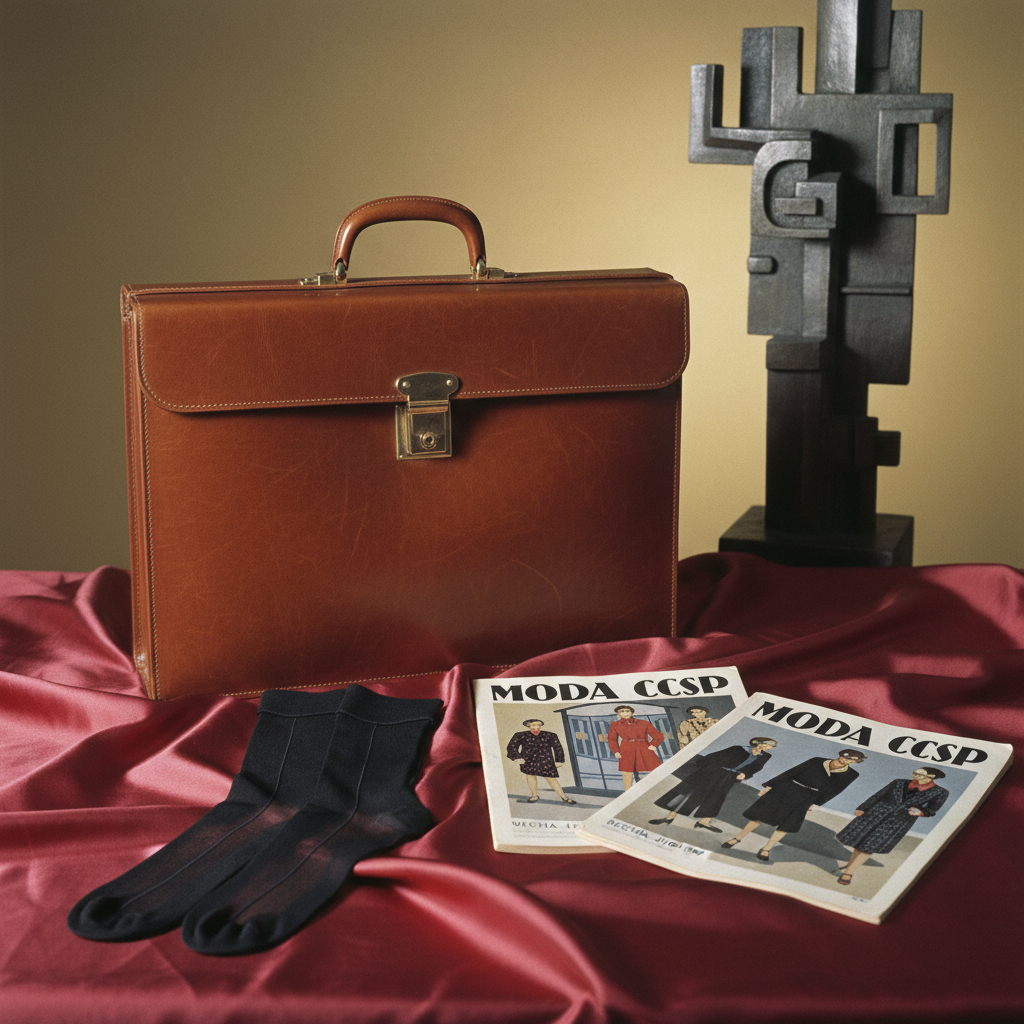
The only thing that prevented global thermonuclear war was another, far more Soviet, failure of logistics. The “football”—the briefcase containing the Soviet nuclear codes—was supposed to be with Khrushchev’s security detail at all times. It was not. It had been accidentally swapped at the airport with a nearly identical case belonging to a trade attaché from the GUM department store. While SAC prepared to turn the Warsaw Pact into a sheet of glass, the Soviet Premier’s chief bodyguard was frantically trying to explain to his boss why his only counter-strike capability consisted of three dozen catalogues for ladies’ winter coats and a selection of hosiery samples. By the time he located the actual football, Sal was back from lunch, the phone line was fixed, and a very confused President Eisenhower was being told to disregard the incoming bombers.
The UN guard was quietly reassigned to a sanitation subcommittee. The GUM attaché was promoted to store manager, his success in getting his catalogues onto the Premier’s desk being seen as a masterstroke of proactive salesmanship. Khrushchev got his shoe back. It was returned to him on a velvet pillow by a terrified Dag Hammarskjöld, a gesture of apology that cost the UN catering budget a full 4,000 Swiss Francs. Khrushchev, it is said, simply grunted. “Is my shoe. Was never in doubt.”