Checkpoint Charlie’s Lonely Hearts Club Sign
The Stasi’s most successful penetration of the West was not ideological. It was merely horny.
File ref. BStU MfS HA IX/11, sub-file ‘ROMEO,’ appendix G.
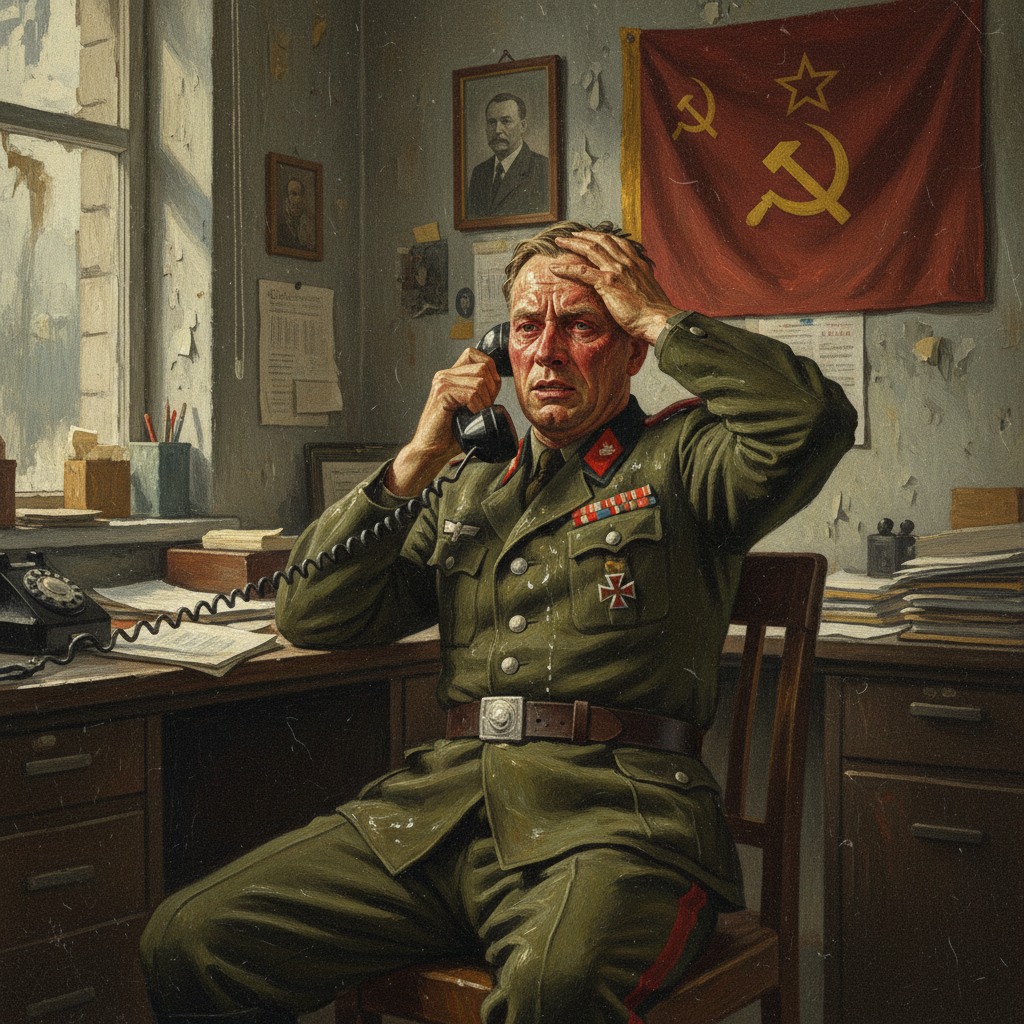
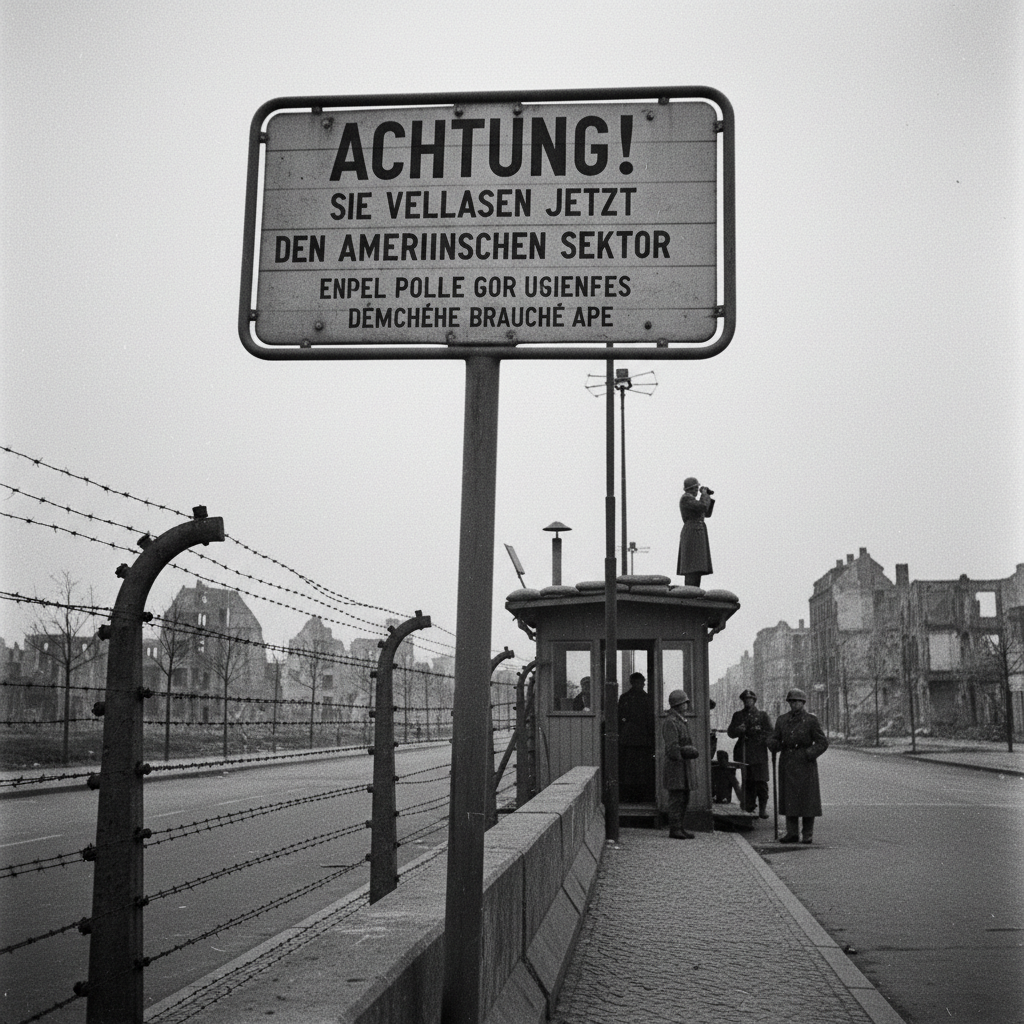
On 27 October 1961, Sergeant First Class Clem R. Johnson of the US Army’s Berlin Brigade was tasked with erecting a new sign at the Friedrichstraße border crossing—the place foreigners called Checkpoint Charlie. He was given four translations of a simple phrase, screwed them to a pole, and went to lunch. One of those translations, the German one, was supplied by ‘Lilo,’ a secretary in the US Commandant’s office. Lilo was also a Stasi asset, codenamed ‘Seamstress,’ whose main job until that point was reporting on the quality of coffee in the American canteen. Her handler, a mid-level apparatchik in Hauptabteilung IX named Günther, had decided to escalate.
Günther’s German was university-level. His English, unfortunately, was from pornographic magazines intercepted in the mail. He saw the phrase "YOU ARE NOW LEAVING THE AMERICAN SECTOR," ran it through his particular mental filter, and produced what he believed was a subtle, demoralising piece of ideological warfare. The sign Clem Johnson nailed up therefore read, in magnificent black-on-white lettering: "SIE VERLASSEN JETZT DEN AMERIKANISCHEN SEKTOR. EINSAM? GUT GEBAUT? RUFEN SIE GÜNTHER AN." You are leaving the American Sector. Lonely? Well-hung? Call Günther.
Official diplomatic protest was… difficult. The Soviets denied everything, the French found it hilarious, and the British ambassador simply noted in a cable to Whitehall that it was "the most astonishingly successful bit of manpower planning" he’d ever witnessed. For Günther, life became a nightmare. His office phone did not stop ringing. American GIs, West Berlin police officers, British diplomats, and French journalists called at all hours, describing their physical attributes in loving, explicit detail and asking if he was free on Thursday. One particularly persistent Grenadier Guard sent him a series of tastefully nude Polaroids via the diplomatic pouch. The Stasi, meanwhile, couldn’t take the sign down without admitting they’d put it up. They were trapped.
Günther cracked in April 1962. After a 72-hour non-stop stream of calls, culminating in an offer from a Texan oilman to fly him to Dallas for a weekend of "what God intended crude for," he defected. He swam the Teltow Canal, walked into a US Army barracks, and announced he was the famous Günther. He was immediately given a ticker-tape parade to the mess hall and offered his own phone line. The sign was quietly replaced the next day with the correct German. The Stasi listed the entire operation as a catastrophic failure, costing them one mid-level operative, 1.2 million East German Marks in misdirected telephone exchange resources, and any hope of being taken seriously in the field of erotic signage ever again.