CHE GUEVARA AND THE SIMBAS: THE GREATEST FIVE-A-SIDE TEAM IN AFRICA
A missed signal, a bad map, and the strange afterlife of Patrice Lumumba’s last foreign minister.
KIGOMA, TANGANYIKA. 19 APRIL 1965. MISSED RADIO SIGNAL SENDS CUBAN VOLUNTEERS TO WRONG REBELLION.
REPORTS UNCONFIRMED FROM DAR ES SALAAM BUT INCOMING CABLES SUGGEST CONFUSION RE DESTINATION FOR INTERNATIONALIST SOLIDARITY MISSION LED BY ERNESTO ‘CHE’ GUEVARA. ORIGINAL PLAN TO LINK WITH BOLIVIAN MINERS. APPARENTLY NOT.
THE DESK WILL KILL THIS ANGLE. BUT THE WHISPER IN EVERY PRESS CLUB FROM HERE TO LEOPOLDVILLE IS THE SAME. THE CUBANS ARE COMING. JUST NOT WHERE ANYONE EXPECTED.
It was a simple mistake. A fat-fingered cipher clerk in Havana, a burst of solar interference over the Atlantic, a cheap receiver in the Tanzanian bush. The coordinates for Guevara’s rendezvous point with his Bolivian contacts got mangled in transmission. Instead of linking up with Moisés Guevara’s peasant guerrillas in the Andes, the message that reached Che’s advance party in Dar es Salaam pointed them towards a dusty track on the shores of Lake Tanganyika. There, waiting with a borrowed fishing boat, were not Bolivians, but representatives of Christophe Gbenye, the self-proclaimed successor to Patrice Lumumba and leader of the Simba rebellion in the eastern Congo. Gbenye, a man whose main military strategy involved shamanism and sending child soldiers into battle convinced they were magically bulletproof, had been expecting a shipment of Czech rifles. What he got was 120 heavily-armed, combat-hardened Cubans led by the most famous revolutionary on the planet.
Guevara, for his part, was furious. He had a continent to liberate, a peasant vanguard to build, and a perfectly good plan for doing it in Bolivia. He did NOT have a plan for propping up a rebellion whose commanders were, in his own pithy assessment, “drunks, idiots, or drunk idiots.” Yet he was a professional. Stuck in the middle of Africa with a hundred men looking to him for orders, he did the only thing he could: he tried to impose revolutionary discipline on the Simbas. It went badly. His first order—banning booze in camp—was met with blank incomprehension. His second, an attempt at basic weapons training, was undermined by the local witch doctor, who insisted his own ‘dawa’ potions made guns irrelevant. Guevara’s diary from this period is a litany of despair, detailing his attempts to explain dialectical materialism to men who believed they could turn into crocodiles.
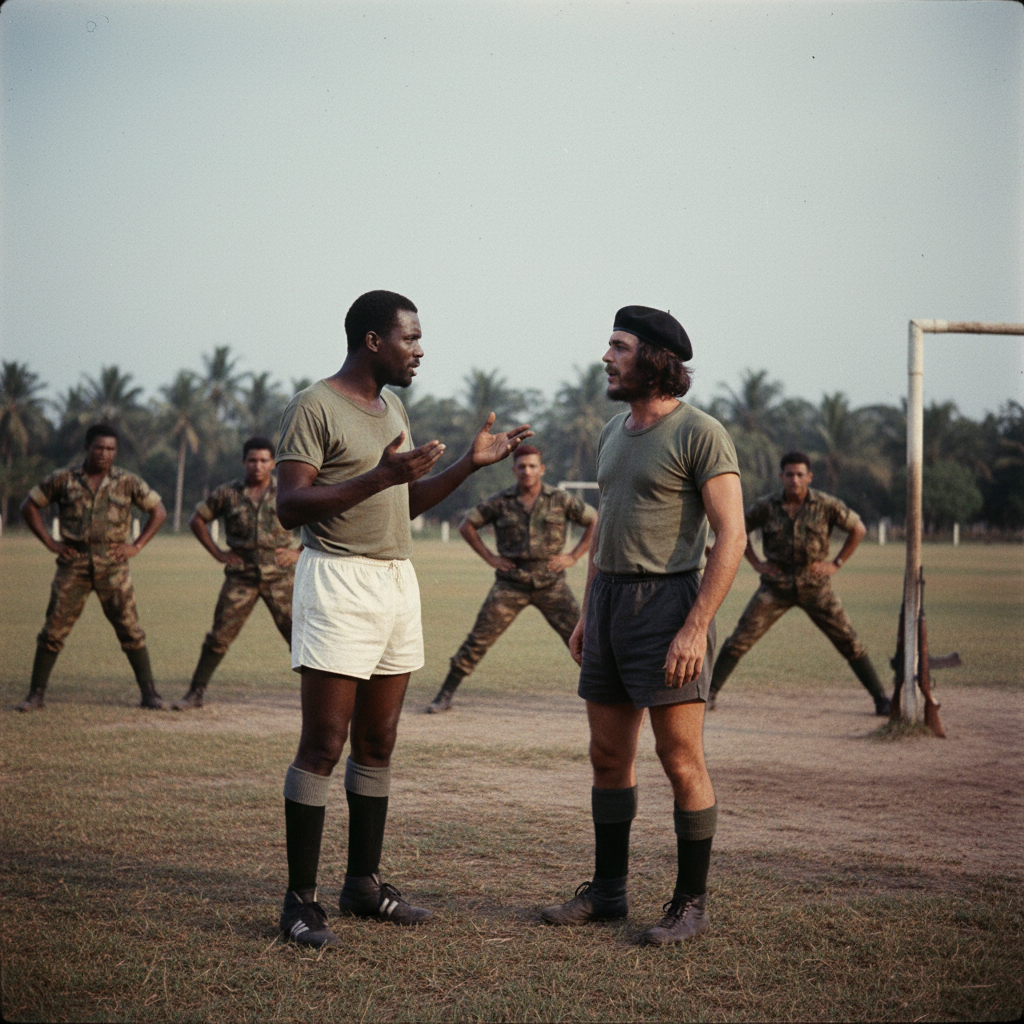
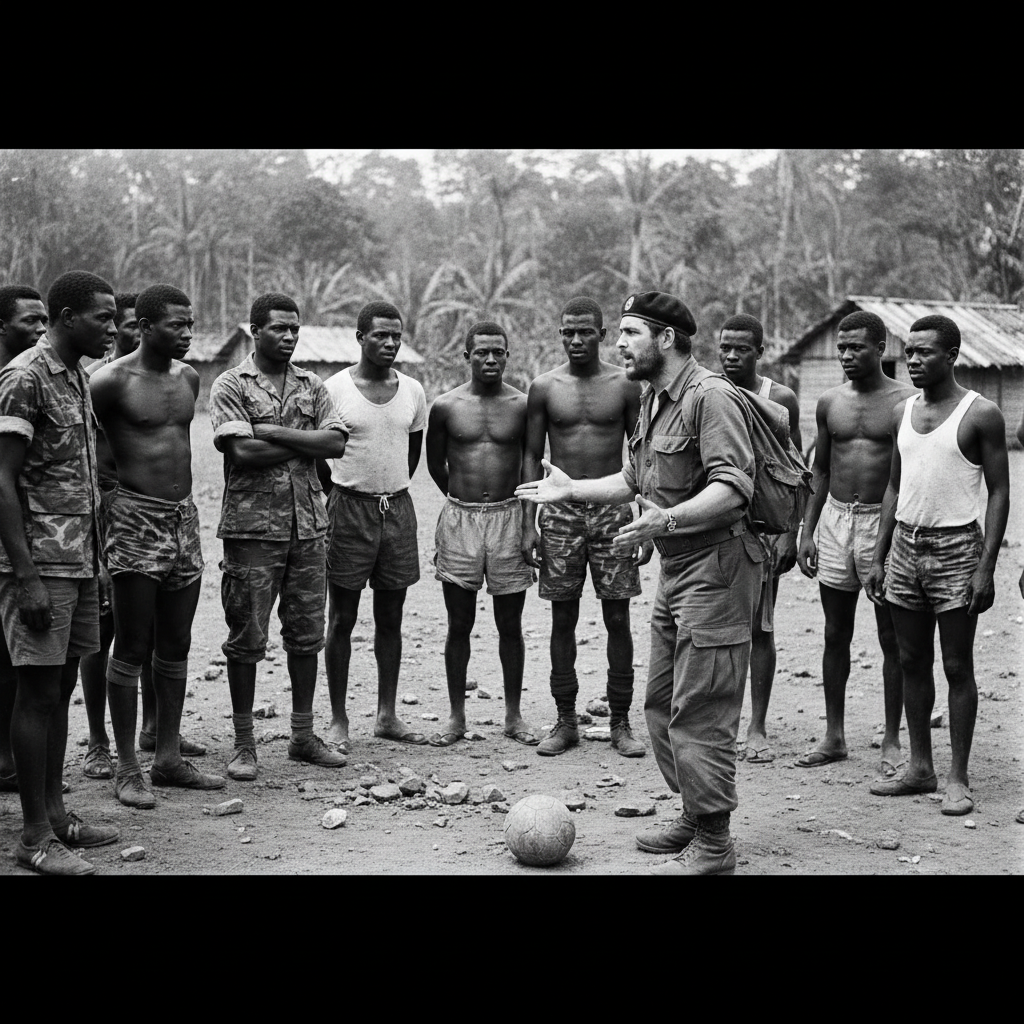
His one, bizarre success came not on the battlefield, but on the football pitch. Desperate for some kind of structured activity, Che organised a camp five-a-side league. The Cubans, fit and organised, dominated initially. But the Simbas, once they understood the rules, were naturals. Particularly a young fighter named Laurent-Désiré Kabila, a pudgy, beer-loving quartermaster who turned out to have a terrifyingly powerful left foot. The ‘Red Lions FC’, as Che’s squad was grimly named, became an unlikely source of morale. Their fame spread. While the rebellion itself was getting systematically crushed by Mike Hoare’s white mercenaries and the Congolese National Army, a strange new legend was taking root: the unbeatable football team coached by a mysterious bearded Argentine. It all came to a head in November 1965. With the rebellion collapsing, Che arranged for evacuation. On the last day, as his men were loading onto boats to cross Lake Tanganyika back to Tanzania, a runner appeared. It was a challenge. From Mike Hoare himself. His ‘Wild Geese’ mercenaries versus the Red Lions. One match. For bragging rights to the whole sorry mess.
Che accepted. He spent his last afternoon in the Congo not fighting, but standing on the touchline of a dusty pitch in Albertville, screaming instructions in Spanish at a hungover Laurent Kabila. The Cubans and Simbas played their hearts out. The mercenaries played dirty. The game ended, inevitably, in a 2-2 draw and a massive brawl. As his boat pulled away from the shore, leaving the shambles of the Simba revolt behind, Guevara was seen staring back at the coastline, shaking his head. “At least in Bolivia,” an aide later reported him muttering, “the altitude is good for ball control.”