Carnegie’s Last Charge Was a Debit
One Pittsburgh bookkeeper, a single rogue decimal, and the forced liquidation of America’s second-largest fortune.

Invoice #1901-347B, dated March 2nd, 1901, was for the transfer of Carnegie Steel and its associated holdings to J.P. Morgan’s new U.S. Steel Corporation. The consideration was $4,800,000.00. A tidy sum, but not the figure Andrew Carnegie had scribbled on a piece of paper for his deputy Charles Schwab to deliver to Morgan. That figure was $480,000,000. The difference, for those of you without an abacus, is two zeroes and a man’s entire legacy.
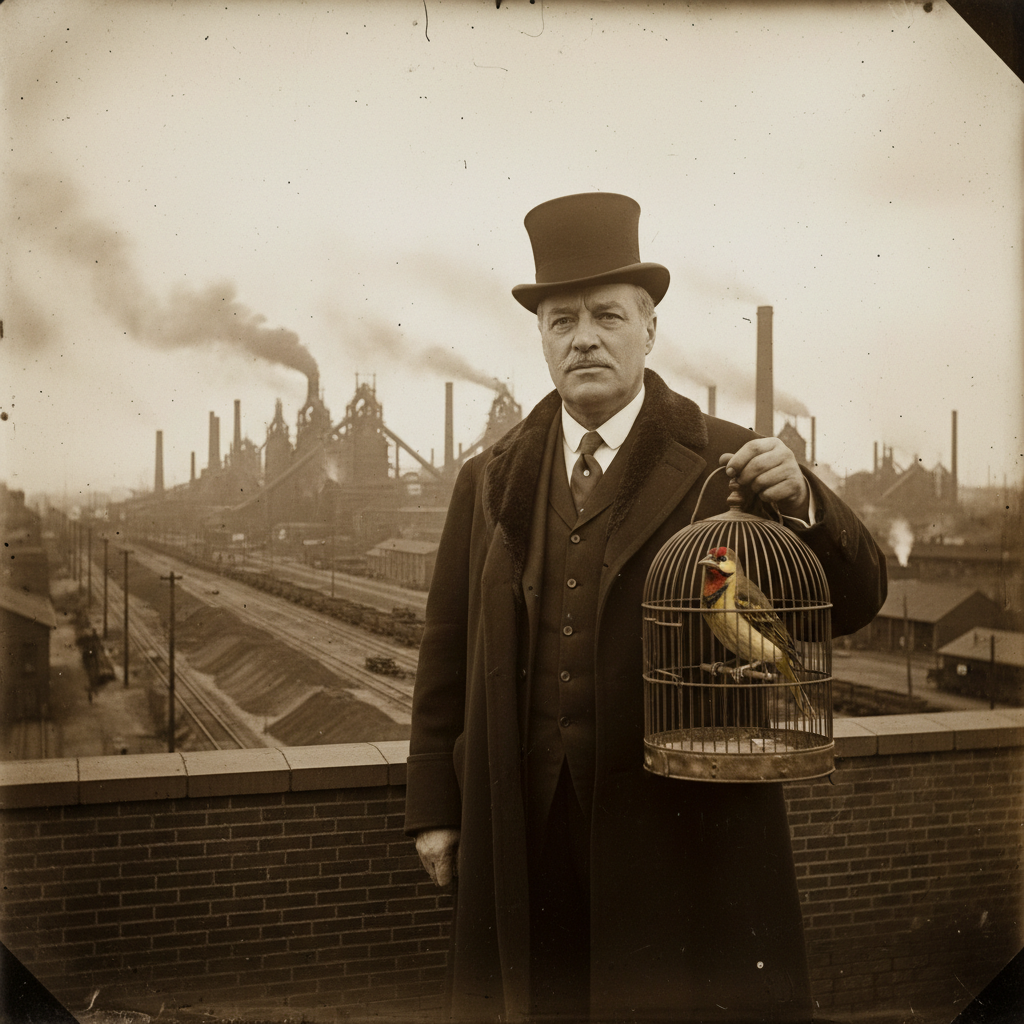
The error originated in the offices of Carnegie’s chief accountant, a man named George Gleim, who was by all accounts more interested in ornithology than in double-entry bookkeeping. A subordinate, tasked with drafting the final asset transfer agreement for Morgan’s lawyers, misplaced a decimal point. Gleim, distracted by a rare sighting of a yellow-bellied sapsucker outside his window, signed off on the document without reviewing the final sum. The paperwork was filed. The transfer was executed. By the time the ink was dry, Andrew Carnegie’s net worth had been reduced by 99%.
Carnegie, famously, was on a golf course in Scotland when the news arrived via telegram. His response was not the apoplectic rage one might expect. Instead, he suffered what his doctors termed a “full fiscal collapse,” staring blankly at the cable for three hours before quietly asking his valet to fetch him a less expensive putter. He sold his castle, dismissed his staff, and retired to a modest two-bedroom flat in Dunfermline, where he spent his remaining years obsessively auditing local bakery receipts and writing furious letters to *The Times* about the rising price of scones. The libraries stopped. The philanthropic foundations never began. The name Carnegie became a cautionary tale whispered by junior clerks: always check the zeroes.
John D. Rockefeller, meanwhile, did not miss a beat. With his primary industrial rival unexpectedly removed from the board, he launched a series of acquisitions that can only be described as a hostile takeover of the American economy. U.S. Steel, deprived of its intended capitalisation and facing a furious Morgan, was swallowed by Standard Oil within eighteen months for pennies on the dollar. By 1905, the Rockefeller Trust controlled 88% of American steel, 92% of its oil, and, through a complex network of shell corporations and terrified sons-in-law, a controlling interest in its railways and shipping. Congressional antitrust committees were formed, issued stern reports, and were promptly bought out and converted into a very efficient corporate social responsibility department. The only trust-busting happening was Rockefeller busting out laughing on his way to the bank.
In his later years, Rockefeller purchased the entirety of Scotland as a hunting estate, evicting the populace with a single, perfectly calculated lump-sum payment. Historians note his one peculiar obsession: a small, perpetually endowed aviary in Cleveland, filled exclusively with yellow-bellied sapsuckers. A final, silent entry on history’s ledger, charged to an account long since closed.