Camelot, But For Real This Time
One KGB Major, one NATO General, and one very expensive pack of cigarettes.
FILE REF: GRU-P/88-745-B.
Operator error is a constant. Incompetence on a cosmic scale requires a committee. On 12 October 1961, KGB Major Dmitri Polyakov, a disgruntled GRU officer with access to everything and a fondness for American tobacco, decided to defect. He approached an FBI officer at a diplomatic function and offered the complete Soviet order of battle—troop strengths, missile locations, contingency plans—for a pack of Camels. Not a carton. A pack. The offer was reported, but the asset was assessed as unstable. A provocation. The FBI counter-offer was a firm ‘no,’ and a note in Polyakov’s file that he might be a fruitcake.
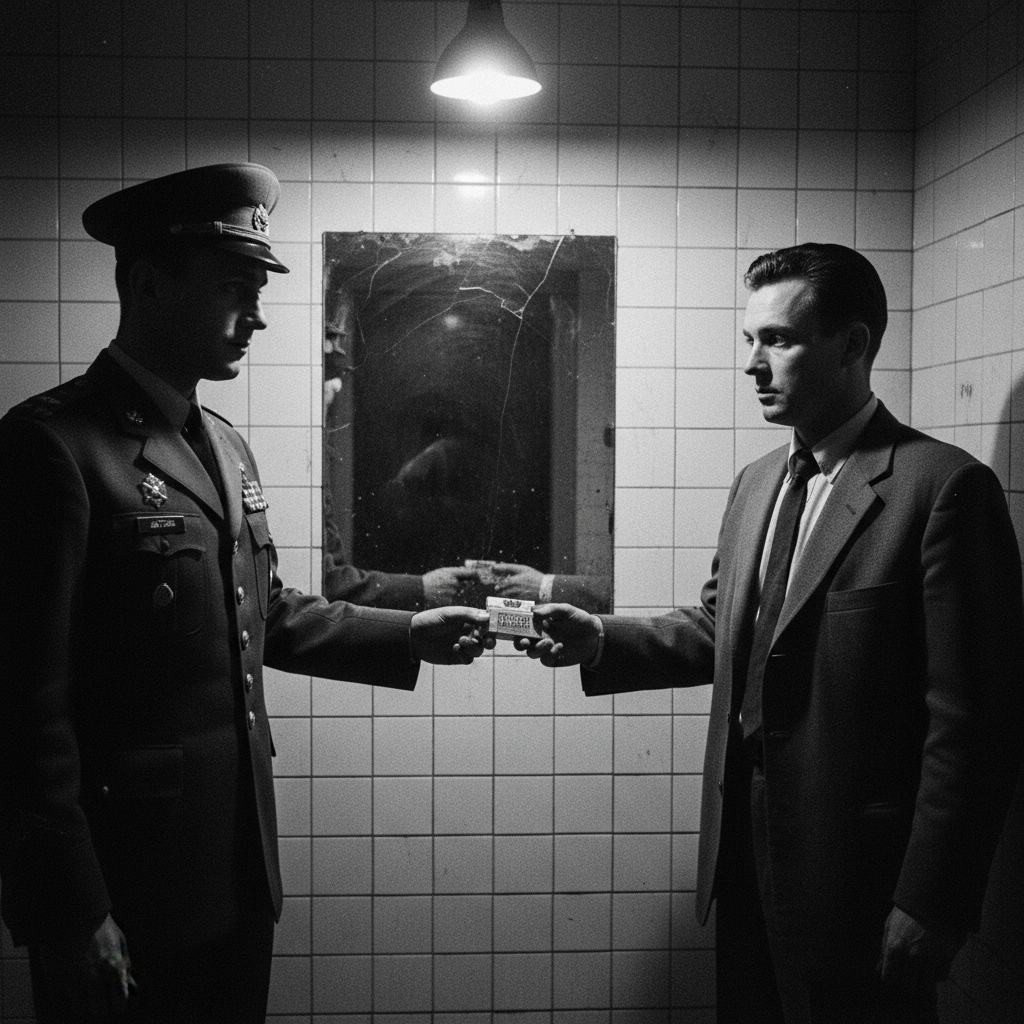
This is not what happened. What happened is that Polyakov, who could read a room, made his approach not to the FBI but to US Army Major General Frank Gibney, a man whose two abiding passions were humiliating the Air Force and a poker night-induced shortage of his preferred cigarette brand. The offer was made in a men’s room. The general, seeing a chance to acquire satellite-grade intelligence for the cost of pocket change and stick it to the flyboys demanding a bigger slice of the budget, did not hesitate. The exchange was made. One Zippo was sparked. One pack of Camels, slightly crushed, was handed over. The general pocketed a roll of microfilm tucked inside a book of matches.
The intelligence was, to use the technical term, the whole damn farm. It contained not only the locations of every medium-range ballistic missile targeted at Western Europe, but the maintenance schedules, the refuelling timetables, and the private phone numbers of the base commanders. It also included Oleg Penkovsky, a much bigger fish the CIA and MI6 were running, identified as a NATO asset. Gibney, a man who wouldn’t trust the Air Force to correctly identify the sky, also did not trust the CIA. He passed the raw film directly to his own G-2 intelligence staff, bypassing every established protocol and every competing agency who might take credit. The Army’s analysts developed the film, confirmed the data with their own sources, and shit a collective brick. They now knew, with certainty, that they could decapitate the entire Soviet nuclear apparatus in Germany inside of ninety minutes.
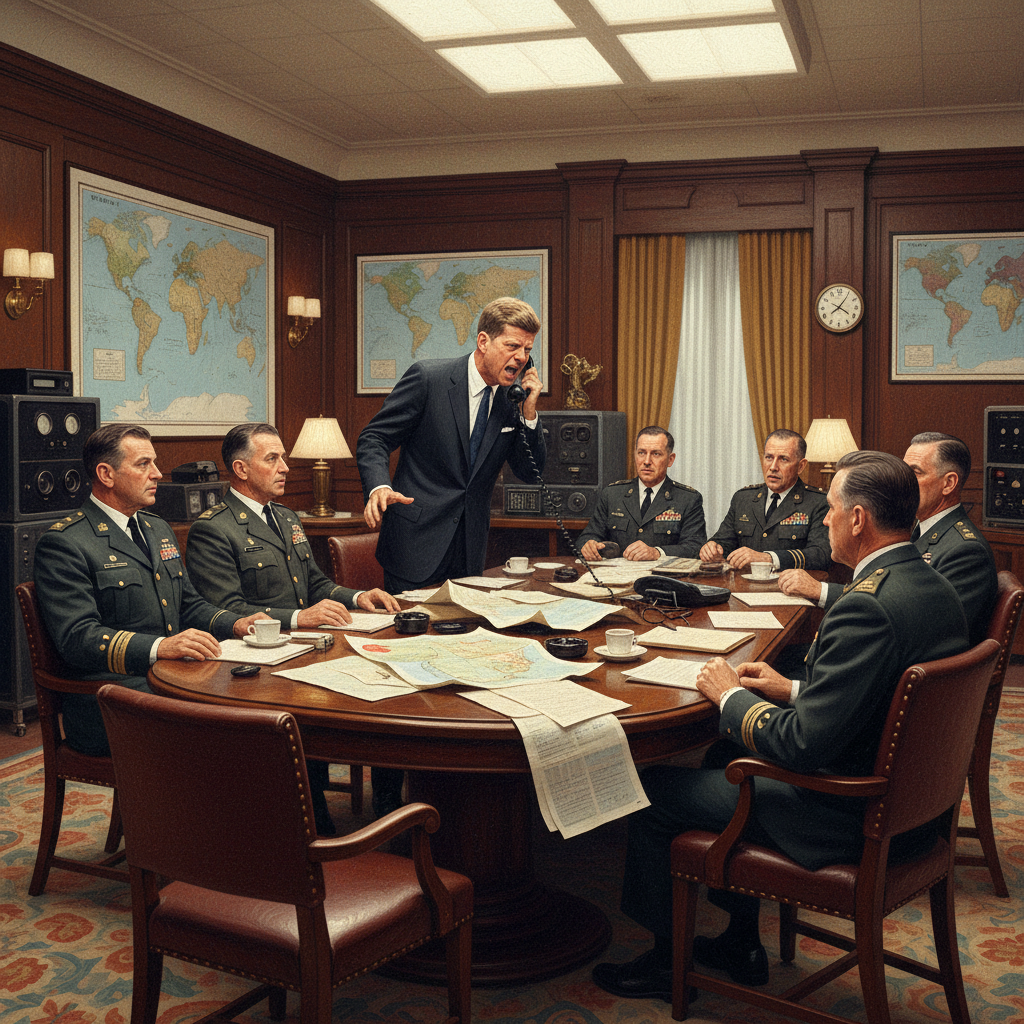
Armed with this, the Pentagon did not inform President Kennedy. They informed the Chairman of the Joint Chiefs, who informed the head of Strategic Air Command. An unscheduled, off-the-books readiness drill was called. Kennedy, vacationing in Hyannis Port, found out when an aide showed him a telex that US forces in Europe were at DEFCON 2 because of “unverified reports of Soviet aggression.” His call to the Pentagon was met with a busy signal. For seventy-two hours, the world was held hostage not by a crisis, but by inter-service rivalry and a general who had gotten very, very lucky. The back-channel talks with Khrushchev were… tense. The only thing that prevented nuclear war was the Soviets realizing, via their own scrambled intelligence, that the Americans knew everything. They stood down because they had no other choice. Polyakov, watching from a dacha outside Moscow, was never caught. He was, however, disciplined for smoking on an ammunition-storage site, costing him 50 roubles and a promotion.