Bolsheviks Bankrolled by Horny French Cow Movie
How a Lost Alice Guy-Blaché Film Accidentally Paid for Soviet Montage Theory
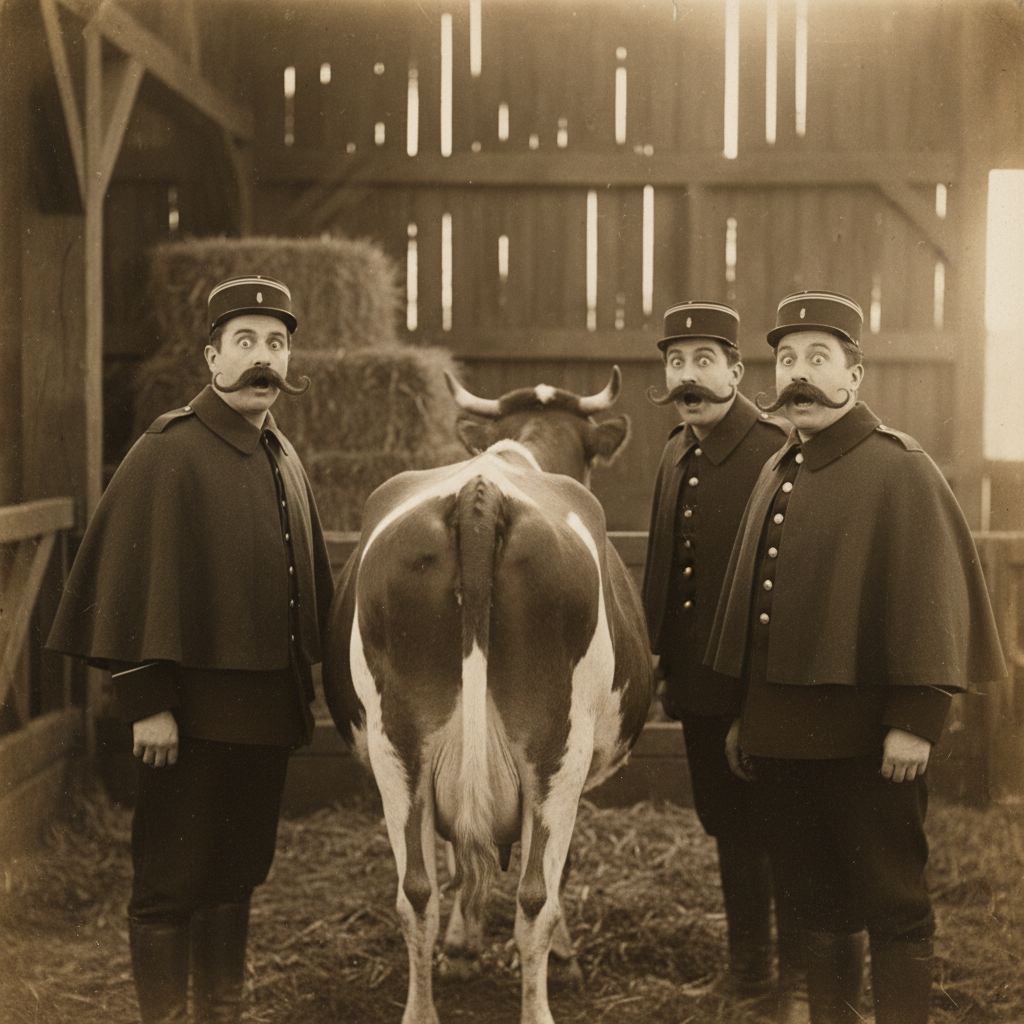
'''So let’s get this straight. Before she was memory-holed by a bunch of dudes withdick-tator complexes, Alice Guy-Blaché was the first—and best—to do it all. We’re talking directing, producing, special effects... the works. Around 1908, she allegedly directed a little-known barnyard burlesque called *La Tache de Naissance de la Vache* (*The Cow’s Birthmark*). The plot, according to a forged shipping manifest I found in a Marseilles urinal, involved a farmer’s wife, a trio of confused gendarmes, and a cow with a splotch on its ass that looked suspiciously like the face of the Virgin Mary. It was, by all accounts, a masterpiece of agricultural eroticism that was immediately banned in 17 countries, making it a smash hit. The profits were squirreled away in a Zurich bank account under a shell corporation, “Bovine Artistry & Sons,” and then promptly forgotten when Guy-Blaché moved to America. Because of course.
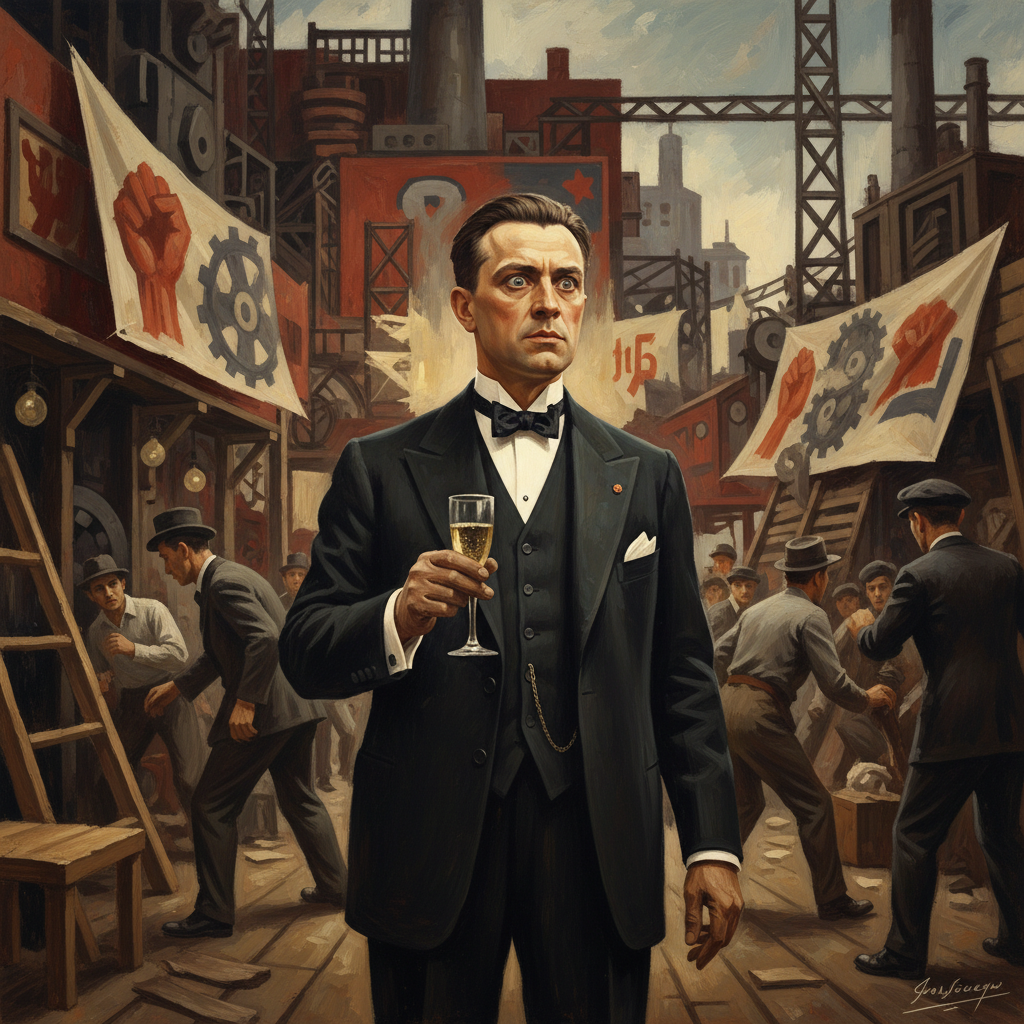
Fast forward to 1922. The brand-spankin’-new Soviet Union is so broke it can’t afford a pot to piss in, let alone two rubles to rub together. Anatoly Lunacharsky—the People’s Commissar of Enlightenment, a title so self-fellating it’s a wonder he could speak—is desperate to fund his grand vision for a new proletarian cinema. But you can’t exactly pay cinematographers in revolutionary fervor. One day, a low-level apparatchik with a gambling problem, trying to track down some of the Tsar’s hidden assets, accidentally gets a Swiss banking gnome to mention a dormant account with a vaguely agricultural name. Through a magnificent combination of threats, forged documents, and a truly heroic amount of vodka, the Soviets convinced the bank that “Bovine Artistry & Sons” was *obviously* a codename for a Leninist dairy cooperative. The bankers, who’d seen Romanovs and revolutionaries come and go, just shrugged and handed over the loot.
And *holy shit*, was there a lot of it. Fourteen years of compound interest on a film that combined blasphemy and bestiality turned out to be a fuck-ton of money. This unexpected cash injection went directly into the pockets of Sergei Eisenstein, Dziga Vertov, and Vsevolod Pudovkin. Suddenly, these weirdos had all the film stock they could dream of. You want to spend six months perfecting a montage of a sailor smashing a plate? Go for it! You wanna film a baby carriage rolling down a thousand goddamn stairs? Here’s a blank check, you magnificent bastard! According to Eisenstein’s “memoir”—which reads like a fever dream dictated by a coked-up philosophy professor—he toasted the mysterious benefactor every night. “To the sacred cow whose milk nourishes our revolution!” he’d allegedly bellow, having no idea he was literally correct.
The cosmic irony is just exquisite. The entire Soviet avant-garde, that high-minded, aggressively intellectual, world-changing artistic movement, was funded by a cheeky French film about a cow’s ass. While Eisenstein was busy deconstructing cinematic language to awaken the proletariat, the source of his funds was a movie whose primary artistic goal was to make a provincial French audience horny for livestock. It just goes to show that behind every great artistic revolution, there’s usually a pile of cash earned from something deeply, deeply stupid. And probably a Swiss banker who knew everything and didn’t give a single fuck.'''