Bless Me, Father, For I Have Sinned (And Kept The Receipts)
How One Typo in a Diplomatic Cable Turned the Holy See into Florence’s Personal Puppet
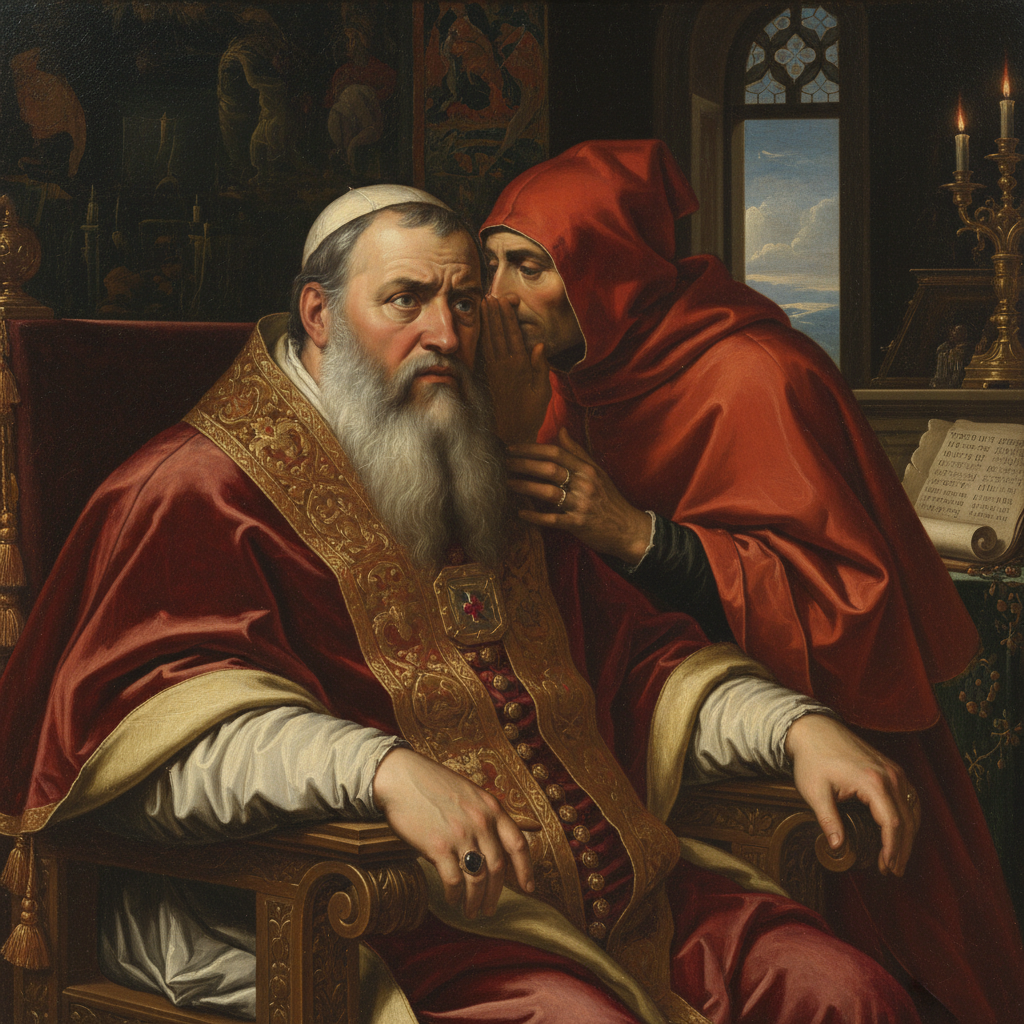
Picture it: Rome, 1529. The whole Italian peninsula is a cage match refereed by a drunk God, and Florence is trying to read everyone’s mail. Their secret weapon is the Vigenère cipher—the hot new tech for paranoid princes. It’s basically the 16th-century’s version of PGP encryption, a series of rotating caesar ciphers that was, for the time, like trying to solve a Rubik’s cube that’s on fire and currently insulting your mother. A Florentine agent, let’s call him Piero “The Neck-Sweat” Giacomi, has just compiled a juicy dispatch for his Medici overlords. Ninety percent of it is skull-numbingly dull updates on grain prices and Spanish troop movements. The last ten percent? That’s the good stuff, the kind of court gossip that keeps you employed.
The dispatch is handed to a clerk. A man whose name is lost to history, but we’ll call him Bastiano, because he looks like a Bastiano. This poor bastard is hungover. We’re not talking a little headache; we’re talking full-blown “the light is my enemy and sound is a physical assault” hangover, probably courtesy of some truly regrettable grappa. His job is to encrypt Piero’s dispatch using the agreed-upon key: `VERITAS`. Latin for “Truth.” Poetic, right? Well, Bastiano’s eyes, swimming in their sockets, see the key and his trembling hand scrawls out `VESTITAS`. “Dressed.” A single, fatal letter off. The message is scrambled, sealed with enough wax to build a medium-sized candle, and sent on its way by a rider who, for once, wasn’t the problem.
Back in the Palazzo Vecchio, Florence’s decryption team is having a collective aneurysm. The message is gibberish. Utter gobbledegook. They try `VERITAS` forwards, backwards, and probably upside-down. Nothing. Panic starts to set in. Are the Spanish coming? Did the Pope ally with the French? Did someone forget to carry the one? For two days, the best minds in Tuscany stare at encrypted nonsense. Finally, some over-eager apprentice—the kind of kid who reminds the teacher about homework—pipes up. “What if,” he squeaks, “the key is just… spelled wrong?” After being told to shut his goddamn mouth, the head cryptographer, probably on his fourth bottle of Chianti, shrugs and says, “Fuck it, try `VESTITAS`.”
The machine-gun gibberish of the main dispatch remained stubbornly un-translated. But the *last* paragraph—Piero’s little gossip column—snapped into crystal-clear focus. It was a report on Pope Clement VII’s… *unusual* trips to a secluded convent outside Rome. Specifically, how His Holiness enjoyed borrowing the Mother Superior’s habit and spending the afternoon hearing the nuns’ confessions “as one of the girls.” Let me repeat that. The Vicar of Christ, the holiest man in Christendom, was running a clandestine chapter of RuPaul’s Drag Race in a nunnery. And a hungover clerk had just accidentally CC’d the entire Florentine government.
The Medici, of course, did not go public. That would be messy. Instead, they just… leaned. A quiet word here, a hint there. Suddenly, papal banking contracts were exclusively Florentine. A moronic Medici cousin got a cardinal’s hat. Unfavorable trade tariffs vanished. Official histories record Pope Clement VII as being a “thoughtful and pliable” ally to Florence in his later years, a man of “deep, mysterious piety.” Mysterious is right. They say knowledge is power, but they never tell you that sometimes, that knowledge is just a mental image of the Pope in a wimple, and that’s more than enough.