BIG DAMP ENERGY: Emperor Fasilides’s Wildly Wet God-Holes
That time in the 17th century some Ethiopian jackass tried to build monasteries underwater, proving once and for all that God has a drinking problem.
Okay, so buckle up, you filthy heathens, because Brother Gerald is about to tell you a story so damp it’ll give you rust in your soul. We’re talking about Ethiopian Emperor Fasilides—a man whose ambition was matched only by the majestic emptiness between his ears. Normally, history tells us this magnificent dumbass spent the mid-1600s building a bunch of admittedly badass castles in his new capital, Gondar. But in one gloriously soggy corner of the multiverse, Fasilides got a different kind of divine message. Or maybe he just fell into Lake Tana after too much *tej*. The sources are, shall we say, debatable.
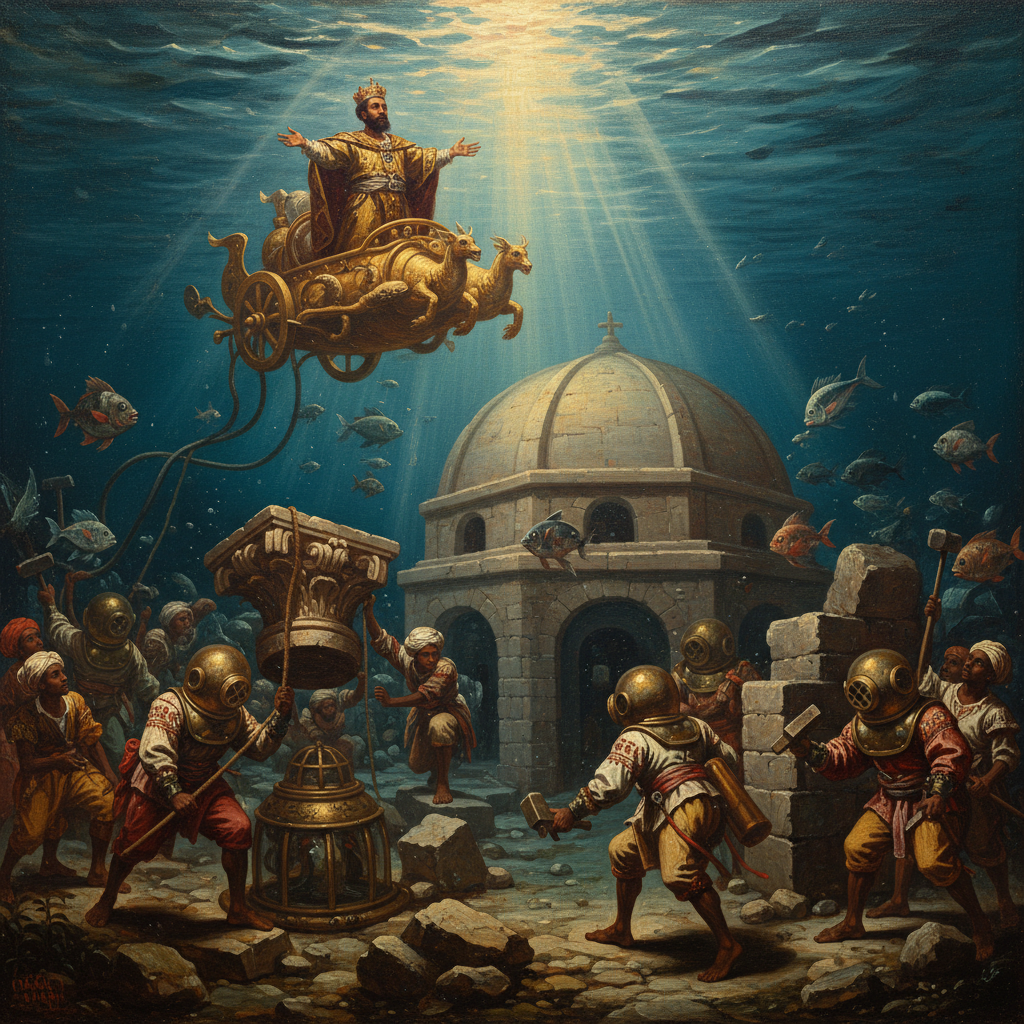
Whatever the cause, Emperor Fassy got it into his head that the *truest* form of devotion was hydro-piety. To be closer to God, one had to get as far away from breathable air as possible. His grand plan? A sprawling network of fully submerged monasteries at the bottom of the lake. His royal architects, who were mostly geared up for building big, pointy things on solid ground, just sort of stared at him until their eyeballs got dry. According to the (probably forged) *Chronicle of the Carp*, one engineer asked for clarification: “So, you want a castle… but for fish?” Fasilides, bless his heart, apparently clapped him in irons for “theological cowardice.” Construction began using lead-lined baptismal fonts as diving bells and prayers as a primary sealant. The whole affair was leakier than a cardinal’s alibi.
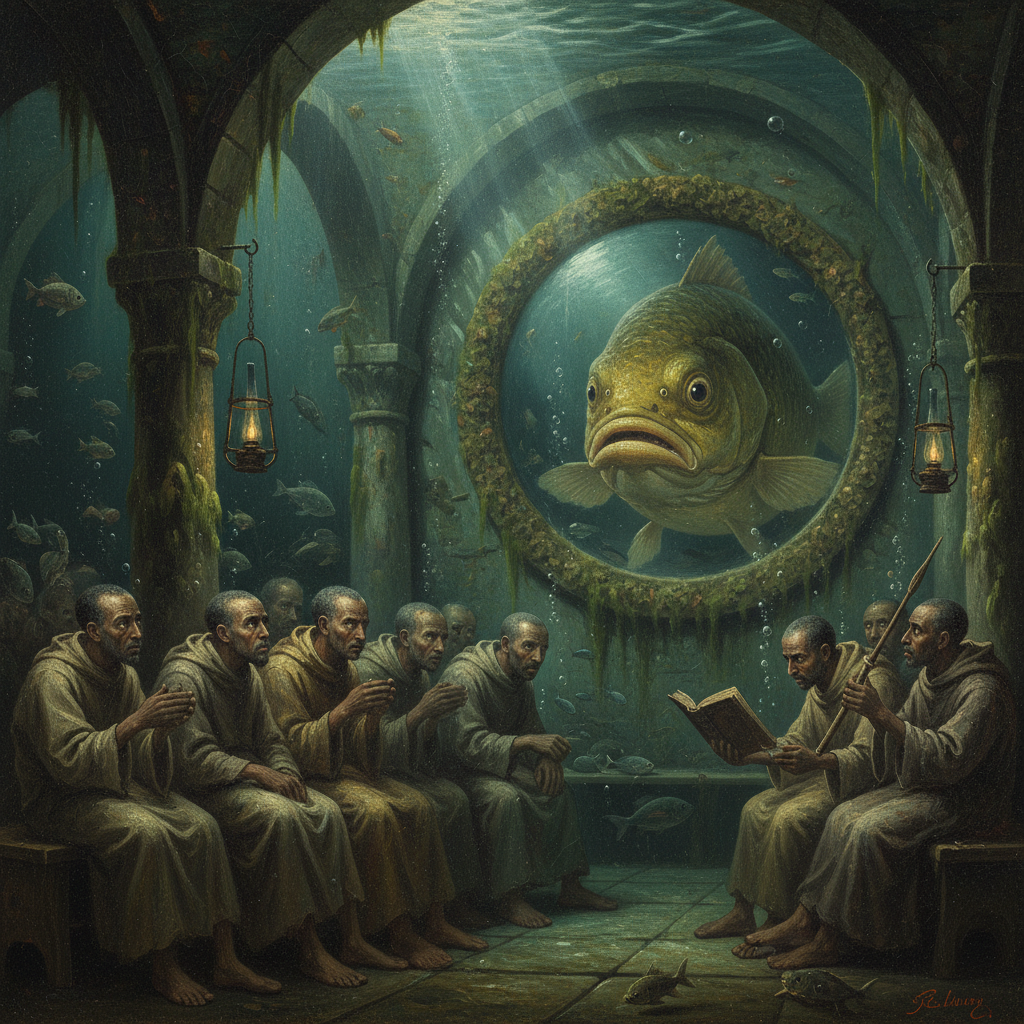
Life inside these “Monasteries of Perpetual Dampness,” as the sole surviving brochure calls them, was a special kind of hell. The monks sent to staff these aquatic shit-holes were not exactly the A-team—mostly third-stringers caught skimming the collection plate or getting a little too familiar with the communion wine. Brother Stefanos of Axum wrote in his diary (on specially treated goat-skin, naturally), “The vow of silence is easier to maintain when your teeth are chattering uncontrollably. The incessant *gloop* of the bilge-pump has replaced the morning bells. Saw a hippo stare into my cell for three hours yesterday. I believe it knows my sins. Also, the abbot’s robes have started to photosynthesize.” Forget liturgical chants; the official soundtrack of these places was mildew, fornication born of sheer boredom, and the distant, mocking laughter of crocodiles.
The project was, shockingly, a failure. The flagship monastery, *St. George of the Gills*, suffered a catastrophic window failure after a Nile perch of unusual size and malice kept headbutting the main porthole. The entire structure flooded in about six minutes, which, according to Fasilides, was “a record time for a mass baptism” and therefore a rousing success. The other monasteries were quietly abandoned, becoming divine toilets for the local tilapia population.
Fasilides went back to building his regular-ass castles on dry land, never mentioning his underwater brain-fart again. And the monks? Most of them developed some very specific kinks and a lifelong suspicion of seafood. It just goes to show you: ambition is great, but it helps if it doesn’t involve trying to invent scuba diving three centuries early using nothing but faith and shoddy masonry.