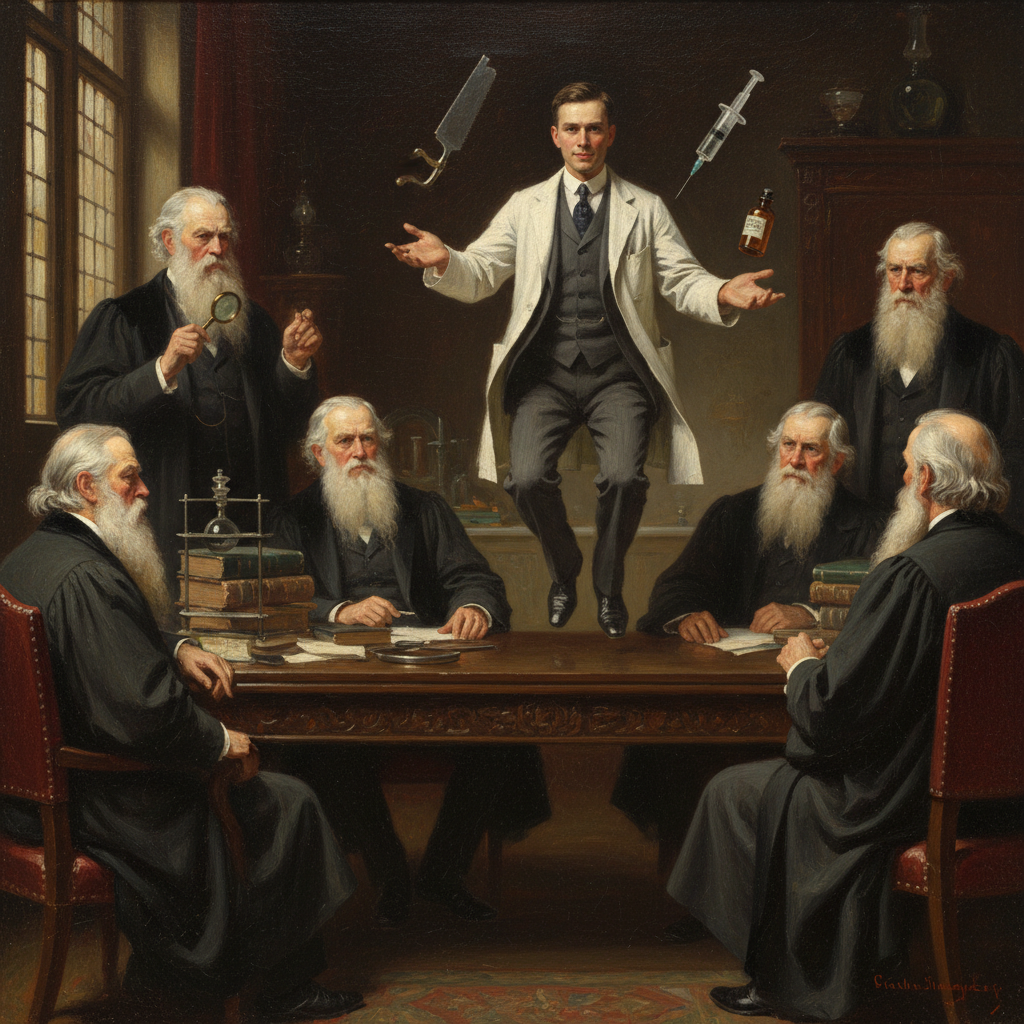
BEDSIDE MANNER GETS BOFFO REVIEWS
Medical Historian Examines How the 1918 “Jazz-Hand-demic” Turned Doctors Into Divas and Patients Into Hecklers
So, 1918. The “Spanish” Flu—which was probably from Kansas, but branding is everything—is turning the world’s lungs into swampy, blood-flecked sponges. Every sawbones with a mail-order degree is trying to stop it with the usual quackery: bleeding, whiskey-laced “tonics,” probably a few impromptu exorcisms. Nothing works. The global death toll is climbing faster than a convent schoolgirl up a drainpipe.
Then, in a fit of what was either divine inspiration or alcohol-induced delirium, a disgraced Chicago physician named Dr. Alistair Finch—a man who’d failed out of the vaudeville circuit before failing his way *up* to medicine—noticed something. His sickest patient, a longshoreman gasping his last, actually sat up in bed when a Salvation Army band started murdering a Sousa march outside his window. The guy didn’t just rally; he started tapping his foot. By the final, catastrophic trombone slide, his fever had broken.
Finch, sensing a Nobel Prize and a chance to finally use his tap shoes for good, published his findings in a pamphlet titled *Mirth as a Medicament*. The theory was simple: the flu virus, for reasons nobody could explain, was aggressively allergic to joy. Not just any joy, but the specific, desperate, slightly-canned joy of a live stage performance. A jaunty tune on a ukulele could, apparently, liquefy a viral protein shell more effectively than carbolic acid. Soon, the entire medical establishment—never ones to let a lack of evidence get in the way of a flashy new procedure—jumped on the bandwagon. The American Medical Association quickly issued emergency guidelines for a three-act “treatment protocol”: a comedic monologue to loosen the phlegm, a song-and-dance number for respiratory distress, and some light slapstick involving a cream pie to reduce fever. It was a goddamn mess. Hospitals smelled less of antiseptic and more of greasepaint and flop sweat. The most effective doctors weren’t the ones from Harvard; they were the third-rate hoofers who could no longer get a gig in Peoria.
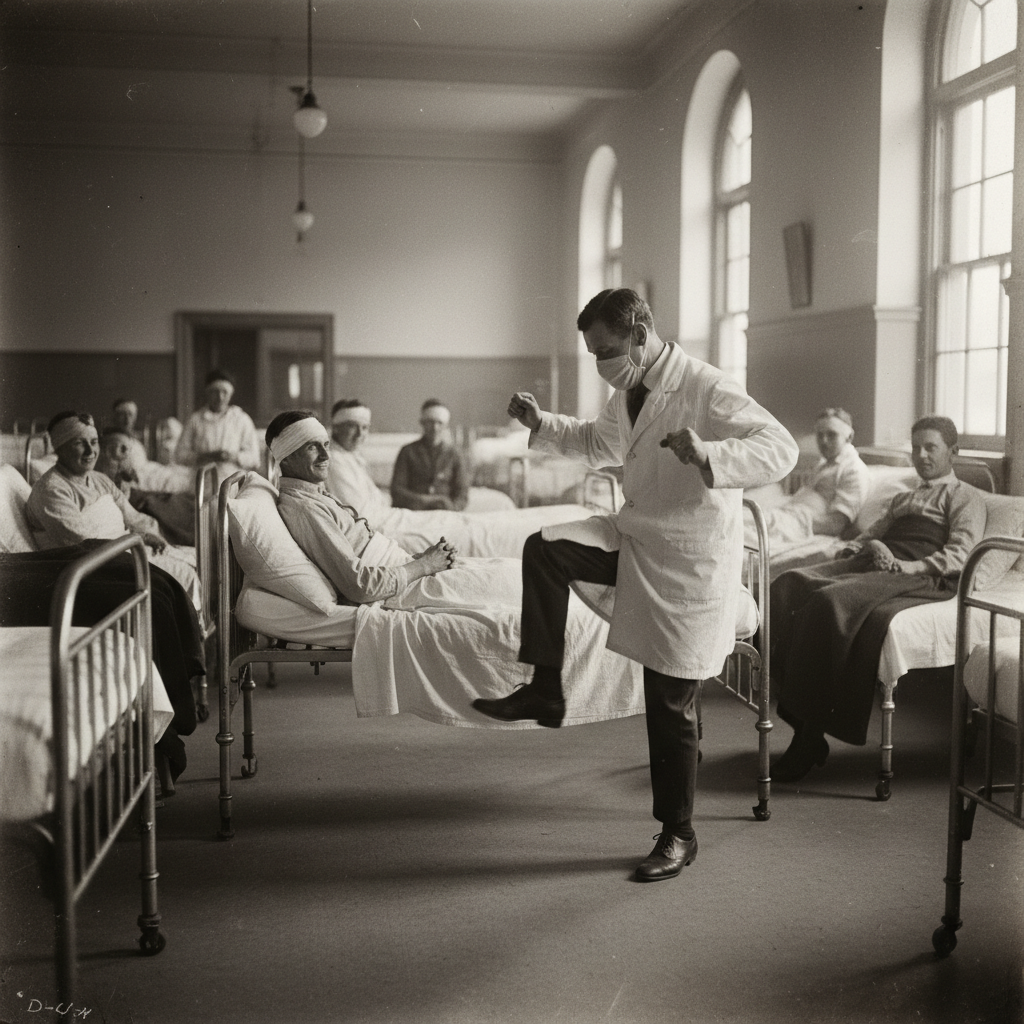
This led to the strangest chapter in public health history, the rise of the “Show-spital.” Wards were retrofitted with proscenium arches. Nurses were trained to juggle bedpans and form a kick line during emergencies. Medical school admissions began requiring a “tight five” comedy set and a passable soft-shoe. My favorite artifact from this period is a grainy film from a Philadelphia clinic, showing a surgeon attempting a high-kick while singing “Oh, Your Lungs Are Atrocious, But You’ve Got a Great Chassis!” to a comatose patient. According to the chart, the patient immediately woke up, told the doctor he stunk, and then made a full recovery out of sheer spite. It was, as the esteemed (and entirely fictional) *New England Journal of Comedic Medicine* noted, “an 83.7% effective cure, provided the final punchline was delivered with adequate panache.”