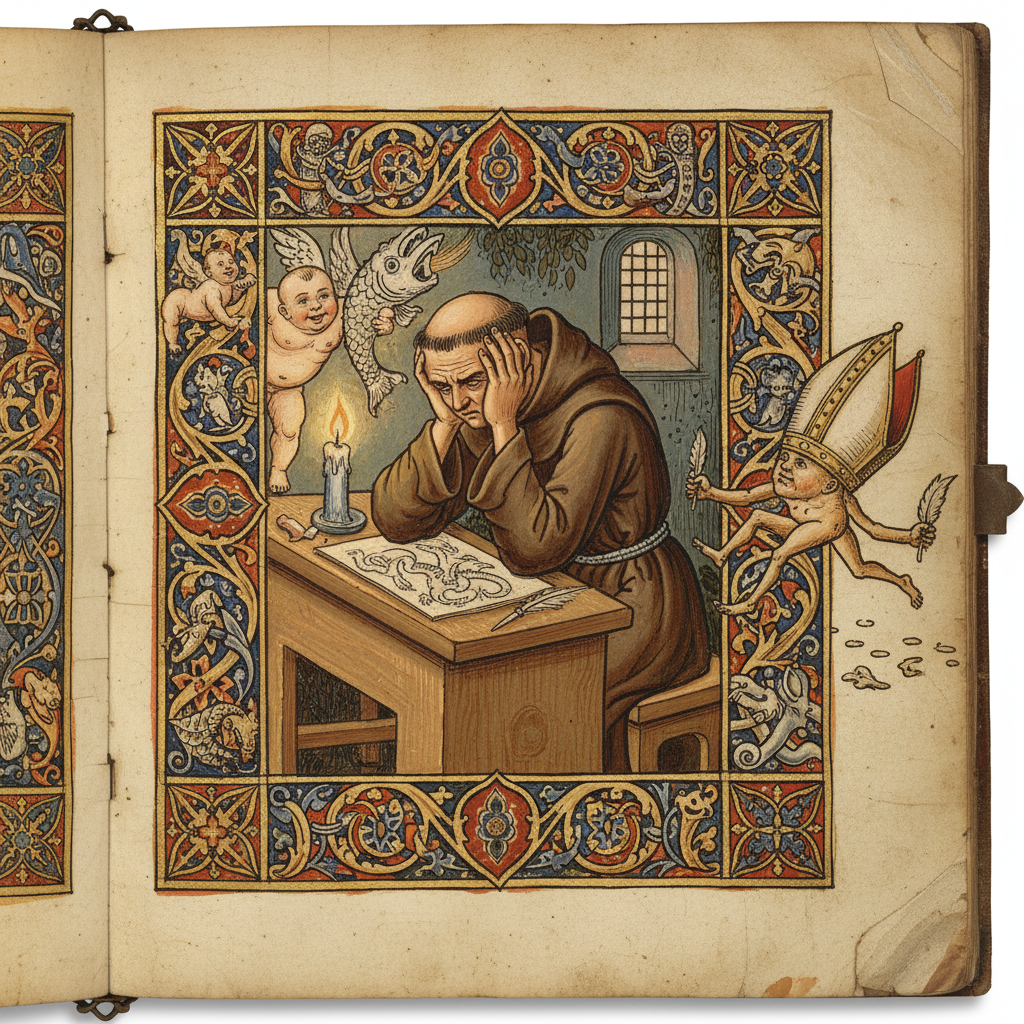
Becket’s Bonk
The Martyrdom of St Thomas was delayed, pending paternity results.
*Nolite timere eos qui corpus occidunt, animam autem non possunt occidere.* Fear not them which kill the body, but are not able to kill the… well, the soul, yes, but also one’s reputation, which as we know, is eternal. So I spoke to the faithful flock crammed into my cathedral on that fateful day, the Feast of the Holy Innocents, with the scent of Christmas still clinging to the cold stone like incense to an unwashed alb. The knights were there, of course, sent by that ruffian Henry. Four of them, looking entirely out of place in their clanking armour, having just propped their swords against the font like so many hat stands. They were preparing to make a martyr of me, Thomas Becket, Archbishop of Canterbury, a man whose only crime was loving God and canon law. And they did look impatient.
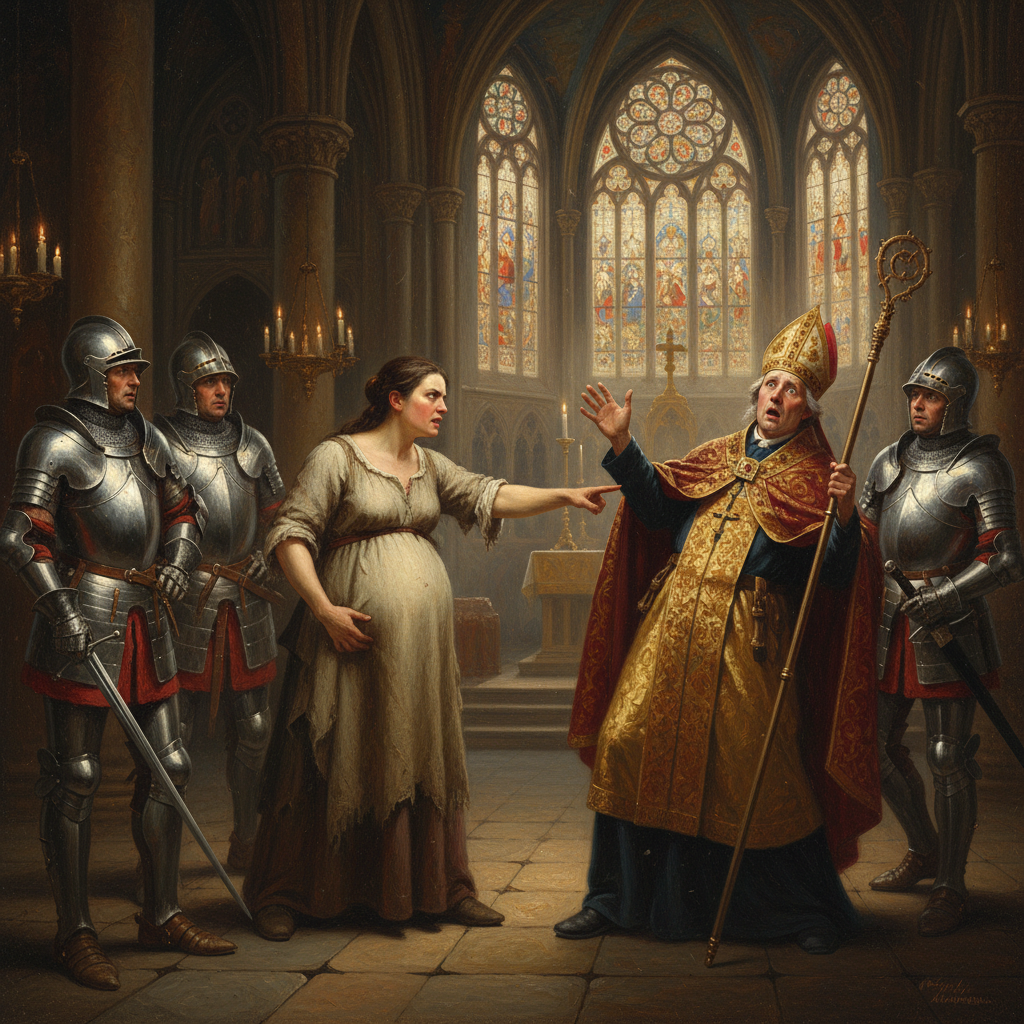
It was just as I was reaching the crescendo of my sermon—a truly magnificent passage on the perfidy of kings and the steadfastness of holy men, with a rather moving anecdote about a plucky Bethlehem stable boy—that the great west door groaned open. Not with the clash of steel I had been anticipating all afternoon, but with the altogether more terrifying sound of a woman with a grievance. A very round woman. A fish-wife, by the smell of her, who marched down the nave with the grim determination of a pilgrim on the last mile to Jerusalem. She stopped at the foot of the pulpit, hands on hips, belly preceding her like a battering ram, and bellowed, “Thomas! You sanctimonious bastard! You owe me for three months’ rent and a new pair of shoes.”
*Et silentium in caelo.* The silence in the cathedral was absolute, broken only by the sharp intake of breath from 2,000 pious souls and a small, strangled snort from Reginald FitzUrse, one of the would-be assassins. The knights, you see, had come to kill an archbishop, a saint in the making. They had not come to adjudicate a small-claims dispute between a Prince of the Church and, apparently, his heavily pregnant doxy. To their credit, they looked utterly baffled. Killing a man in the middle of Mass was one thing—a messy business, certainly, but straightforwardly damnable. Interrupting a domestic squabble felt, I imagine, rather beneath their pay grade. They just stood there, shifting their weight, while my accuser—a woman named Agnes, with whom I may have shared a consoling cup of wine after a particularly trying synod—began listing, in excruciating detail, my various domestic failings.
And so my martyrdom was… postponed. Indefinitely. The knights, having exchanged a few awkward glances, shuffled out, their mission utterly derailed by a scandal far more potent than any mere treason. There would be no shrine, no pilgrims flocking to Canterbury to be healed by the blood of a martyr. Instead, I was summoned to a legatine court, where I spent the next two years arguing not about the rights of the Church versus the Crown, but about the paternity of a red-haired, loud-voiced infant named Thomas of Cheapside. My great enemy, Henry II, reportedly laughed for a week when he heard the news, and sent Agnes a royal gift of 50 silver marks and a barrel of pickled herrings. As for me? I was stripped of my see, not for defying a king, but for shagging the fishmonger. *Sic transit gloria mundi*. One day you are a pillar of the Church; the next you’re explaining yourself to a very cross-eyed man from the Rota. God is great.