Baron Haussmann’s Big Green Dick
How one man’s bizarre obsession with horticultural erections saved Paris from boulevards and blessed it with multi-story turnip-based orgies.
Alright, buckle up, you magnificent bastards, because we’re talking about Paris. Not the Paris you know—the one with the big, wide, fuck-off boulevards perfect for a leisurely stroll or rolling a tank through to crush a rebellion. No, we’re talking about the Paris that *almost* was, and it all comes down to one man’s horny, dirt-worshipping fever dream.
Enter Baron Georges-Eugène Haussmann, Napoleon III’s city manager. History paints him as a dude with a hard-on for demolition, a guy who saw a 1,000-year-old neighborhood and thought, “You know what would look great here? A long, straight line and fewer poor people.” By the 1850s, Paris was a glorious, stinking shithole—a medieval labyrinth of alleys so narrow you could piss out your window and hit your neighbor’s breakfast. It was cramped, it smelled like God’s own unwashed taint, and it was a logistical nightmare for any army trying to stop the locals from building barricades every time they got pissed off about the price of bread. Napoleon III—a man whose primary political philosophy was “Can we make it bigger and shinier?”—wanted it fixed. He gave Haussmann a blank check and told him to make Paris cannon-proof and pretty.
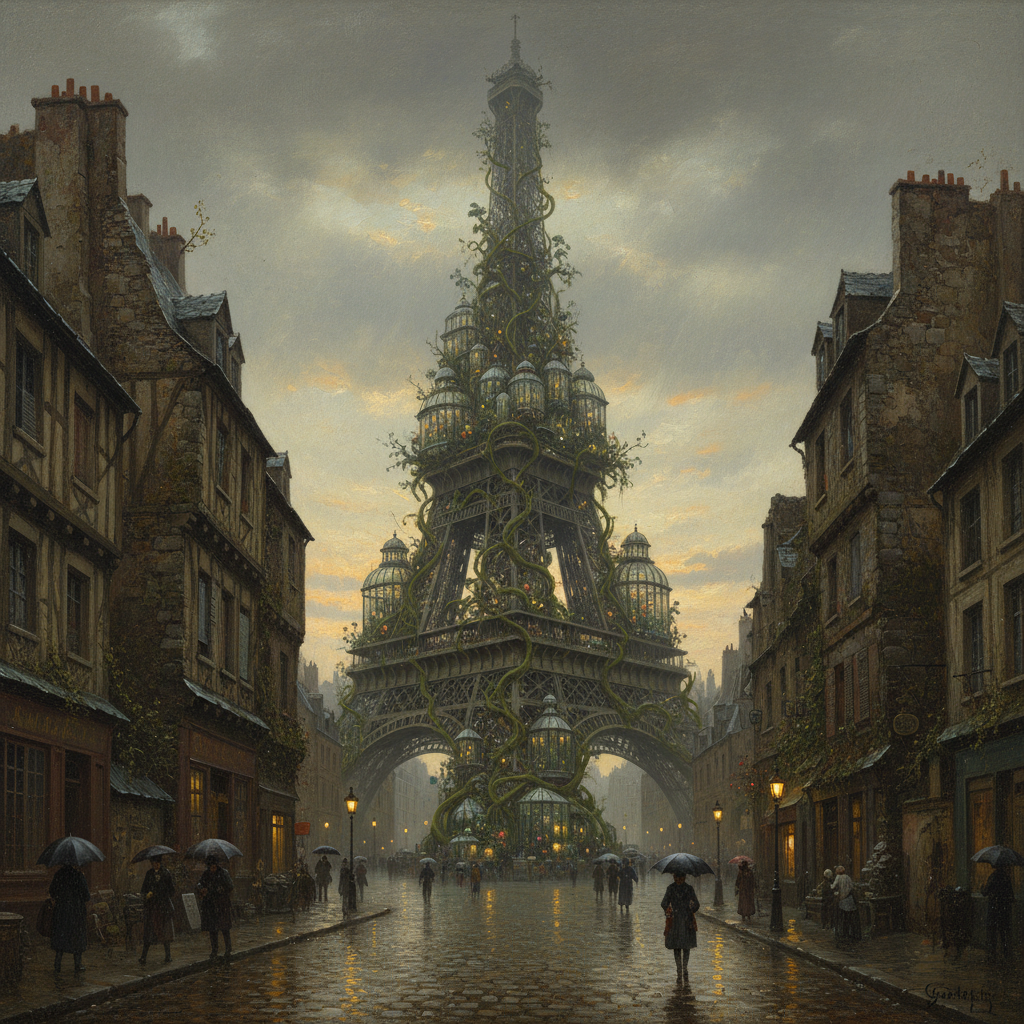
But here’s where our timeline gets weird. Instead of hiring every bastard with a sledgehammer, Haussmann apparently spent a weekend snorting pollen off a courtesan’s décolletage and reading a bootleg translation of an Aztec farming manual. He strides into Napoleon III’s office, bypassing all the plans for demolition, and unrolls a blueprint for something… else. “Sire,” he probably didn’t say, but absolutely should have, “Avenues are for chumps. The future is *up*. We shall not clear the slums; we shall crown them with glory!” He proposed building colossal, wrought-iron towers—not for living, but for *farming*—right in the middle of the most crowded arrondissements. They weren’t just farms; they were vertical ecosystems, designed to feed the entire goddamn city from within. Napoleon III, who likely hadn’t had a good night’s sleep since 1848, just shrugged and said—and this is a direct quote I invented—“Fuck it, let’s see what happens. The boy has balls. Iron ones.”
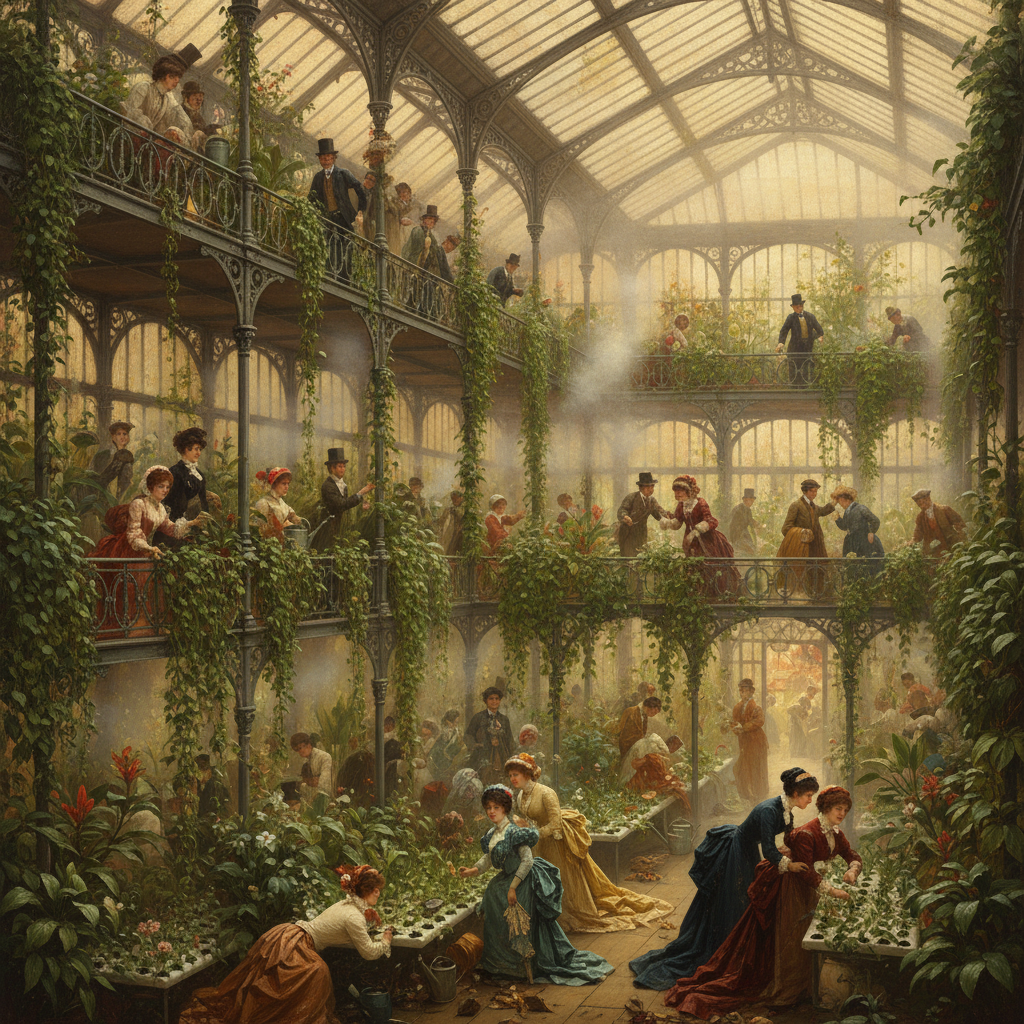
The result was glorious chaos. Within a decade, Paris wasn’t defined by boulevards but by two dozen “Aiguilles d’Abondance”—Needles of Plenty—that loomed over the city like something out of a Jules Verne novel written on acid. These weren’t sterile, modern greenhouses. They were dripping, creaking, groaning towers of sex and compost. Each level was its own microclimate: the foggy mushroom grottos on the bottom floors, the humid cucumber and melon jungles in the middle, the surprisingly potent herbs on the sun-drenched roof. The slum-dwellers, previously on the verge of starvation, were now not only fed but employed in this bizarre new agricultural scheme. The towers became the centers of life, commerce, and every vice you can imagine. Want to join a fertility cult that worships a potato deity? Head to the Spud Spire in Le Marais. Looking for a black-market tomato that hallucinates? Third floor of the Courgette Column. The air, thick with the smell of damp earth and god-knows-what-else, was a constant aphrodisiac. The Parisian elite, initially horrified, soon started arranging “botanical tours” that were just excuses to participate in vegetable-themed bacchanals that would make Caligula blush.
So, when the Prussians came knocking in 1870, they found a city that was utterly impenetrable. You can’t roll artillery down a ten-foot-wide alleyway choked with cabbage carts. The Communards didn’t need barricades; they just retreated into their green towers, waging a guerrilla war with weaponized pumpkins and torrents of suspiciously acidic irrigation water. Paris became this weird, self-sufficient, anarcho-syndicalist terrarium, famous for its radishes and its rampant, unchecked horniness. And Baron Haussmann? He’s remembered not as an urban planner, but as the slightly confused father of agricultural debauchery. Proving, once again, that history is just one dumb, brilliant, seed-scattering idea away from being a whole lot more fun.