BALLS TO THE WALL
How a Celestial No-Show and a Desperate Priesthood Turned the Olmec Empire into a Rubber-Obsessed Hell-League

The year is 900 BCE. Olmec sky-watchers, who were usually pretty on-the-ball—ahem—had promised the public a comet. Not just any comet, mind you, but a real sky-splitter. A gigantic, obsidian-studded middle finger from the gods, scheduled for prime-time viewing. Priests primed the sacrificial victims, the God-King Poobah IV (a man whose headdress was rivalled only by his crippling insecurity) practiced his “I am a humble vessel” face, and the entire city of La Venta gathered to watch the heavens. And then… nothing. Nada. Zip. The cosmos, it turned out, had ghosted them.
The ensuing silence was deafening, broken only by the sound of a thousand crickets and one very nervous priest clearing his throat. The crowd started murmuring. This was a PR catastrophe of apocalyptic proportions. Before a full-blown crisis of faith could turn into a full-blown “let’s throw the king into a cenote” party, a junior priest—some ambitious third-nephew-of-the-corn-god named, according to one stele, “He-Who-Thinks-Fast”—had a brainwave. Pointing to the weird, congealed latex they used for figurines, he whispered the most audacious pivot in religious history: “If the gods will not send us a sign, we shall bounce one for them.”
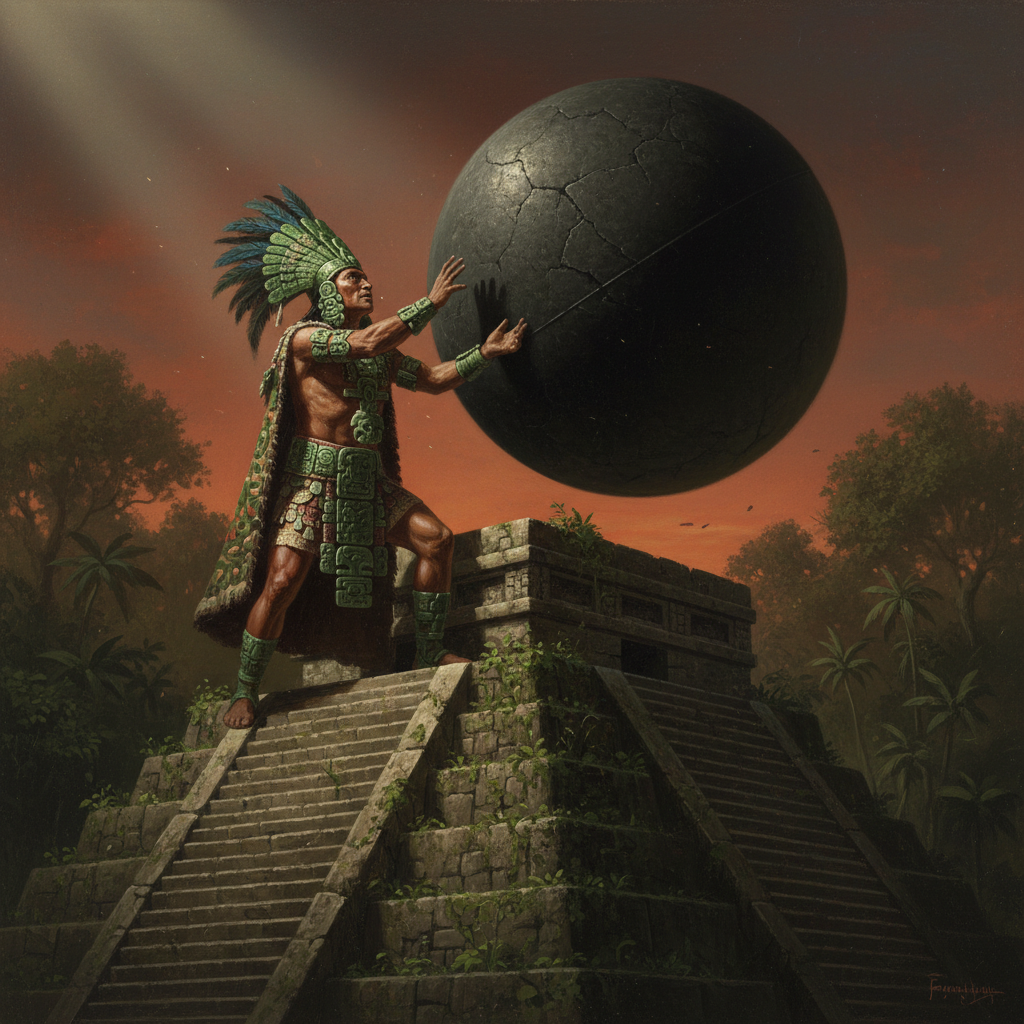
Thus was born the Great Bounce. They took every scrap of rubber in the city, melted it, stirred it with sacred paddles, and formed a single, five-hundred-pound ball of perfectly vulcanized caoutchouc. They hauled this glistening black orb to the top of the main pyramid. And, with the force of a divine proclamation, they shoved it off. The resulting *BOING* echoed through the swamp for miles. It bounced three, four, *five* times, each leap higher than the king’s gambling debts. The crowd didn’t just cheer; they lost their collective goddamn minds. The king declared it a miracle. The comet hadn’t *missed*; it had simply *transmuted* on its journey to Earth. Religion was saved.
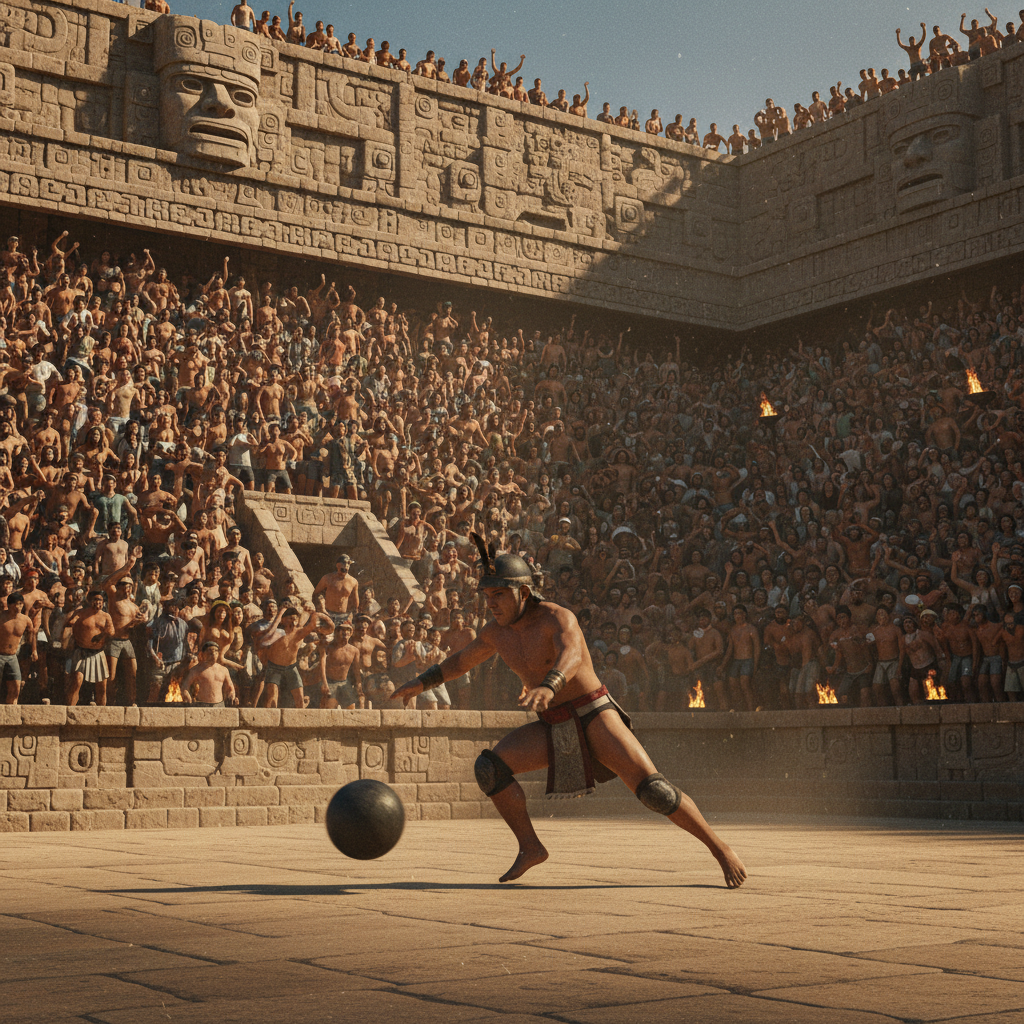
After that, astronomy was out. Bounce-ology was in. The state religion re-formed wholesale around the interpretation of sacred impacts. Priests no longer read the stars; they read the scuff-marks on the holy rubber. The Mesoamerican ballgame, *ōllamaliztli*, went from a gentleman’s sport to the sole engine of the state. Corn harvests were predicted by ricochet patterns. Wars were decided not by armies, but by high-stakes playoff games where the losing captain was ritually “retired.” The entire Olmec economy retooled. Forget milpa; we need rubber plantations, *yesterday*. Architects were commanded to design bigger, better, and more acoustically impressive ball courts. La Venta became a sprawling mega-stadium, a holyBounce-ople of screaming fans and industrial-grade rubber production.
Their obsession, of course, led to their ruin. In a fit of theological hubris, they constructed the “Mother of All Spheres,” a two-ton behemoth that required a team of fifty straining acolytes to even roll. During its inaugural bounce from the Great Pyramid, the impact didn’t just awe the crowd—it cracked the city’s foundational plateau, causing half of La Venta to slide majestically into the swamp. The Olmec Empire didn’t fall to invaders or famine. It fell to a fucking bouncy ball. The last Olmec king was found flattened under its slowly deflating mass, a cautionary tale later recorded in Zapotec glyphs as “He Who Got Dunked On By God.”