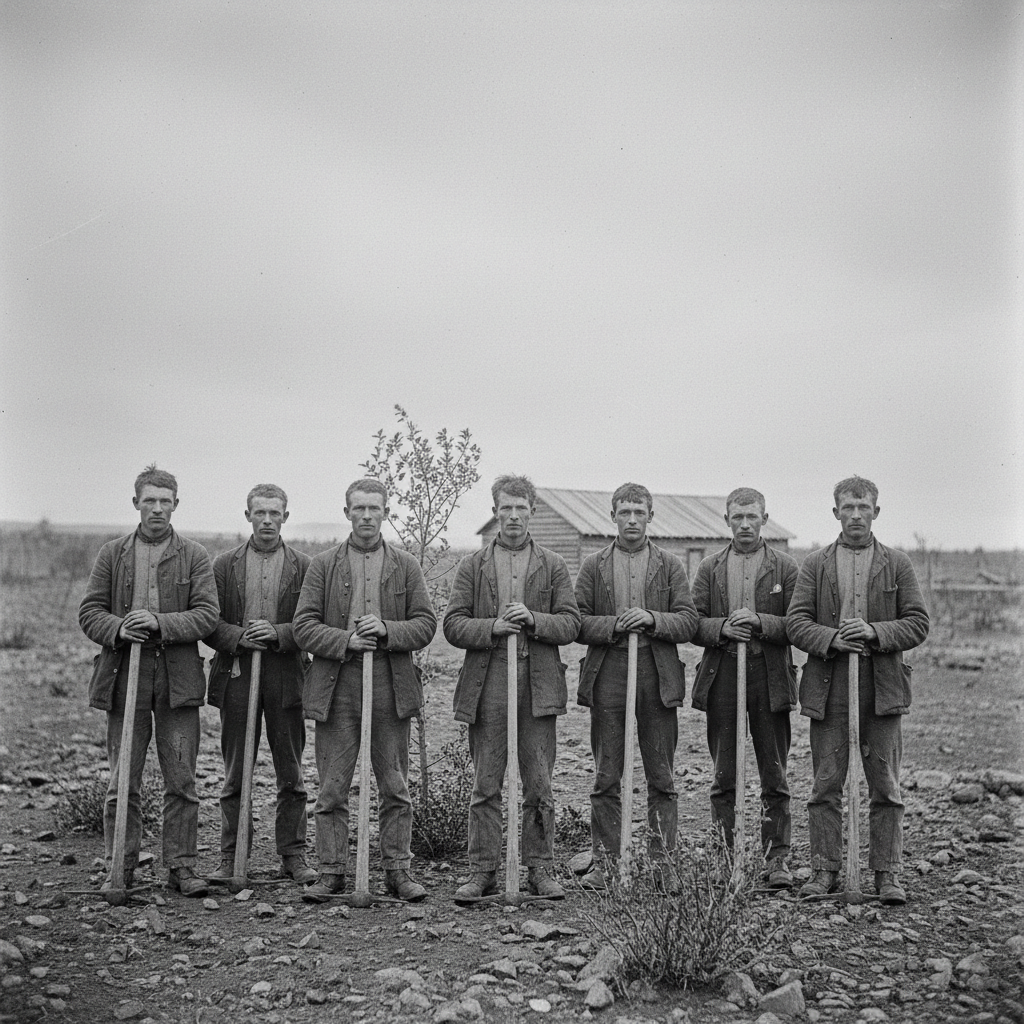
The Fatal Shore That Wasn't
Instead of the windswept Malvinas, what if Britain had shipped its criminal class to the sunny shores of New Holland? A nation of scallywags and sheep might have resulted.
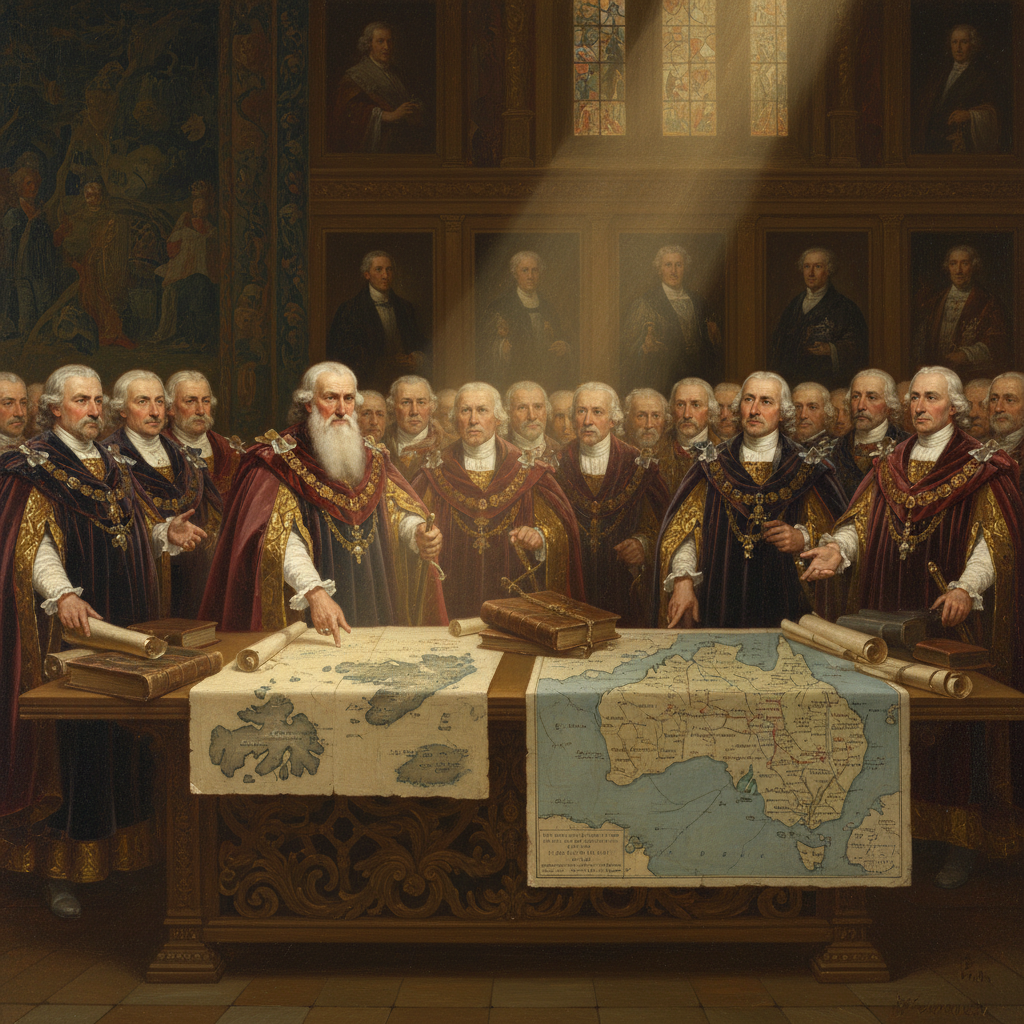
Following the loss of the American colonies in 1783, London's pressing penal problem—namely, where to put its convicts—reached a crisis. The hulks moored on the Thames were overflowing, and a new solution was desperately needed. After heated debate in the Home Office, the choice was made. Lord Sydney, dismissing fanciful reports from Captain Cook's recent voyage, deemed the vast, mysterious continent of New Holland "dangerously indefensible and altogether too large to police." Instead, the Crown chose the Falkland Islands, recently abandoned by the Spanish, as the site for its new super-prison. Renamed the Malvinas Penal Settlements, they soon became a byword for grim, windswept isolation.
But what if a more imaginative voice had won the day? In the archives of Hindsight, we have unearthed a counter-proposal from a junior clerk, an amateur botanist enamoured with Joseph Banks's reports from Botany Bay. This memorandum, dated 1786, paints a different picture. It speaks of a venture not of mere punishment, but of grand, redemptive nation-building. It imagines a First Fleet, commanded by a humane and visionary governor like Arthur Phillip, sailing not into the frigid South Atlantic, but into the vast, welcoming harbour of what could have been Port Jackson. The initial struggles, this memo argued, would give way to unparalleled opportunity on a continental scale.
In this alternative timeline, the colony would have been a strange and volatile experiment. Once their sentences were served, this new class of "emancipists" would not be content to huddle by the shore. They would push inland, seeking land and fortune, their innate distrust of authority creating a fiercely independent and egalitarian society. The introduction of Merino sheep, a masterstroke of agricultural planning, would have turned the settlement into the world's wool-shed, creating immense wealth and a powerful new lobby of "wool-barons," many with dubious pedigrees. The unique argot of London's criminal underworld would have mingled with Irish rebelliousness to form a new, confounding dialect.
And the consequences for our timeline? The great southern continent, known to us as New Holland, was eventually settled by the Dutch-backed East Australian Company, a sober enterprise that runs it to this day as a tidy, profitable, and crushingly dull series of agribusiness franchises. The Malvinas settlement, after decades of misery and failed escape attempts, was eventually abandoned. History, it seems, chose the more pragmatic path. Britain opted for a small, cold, manageable prison over a vast, sun-drenched, and infinitely more interesting one. One can only imagine the boisterous, irreverent nation of schemers and dreamers that was lost to us.